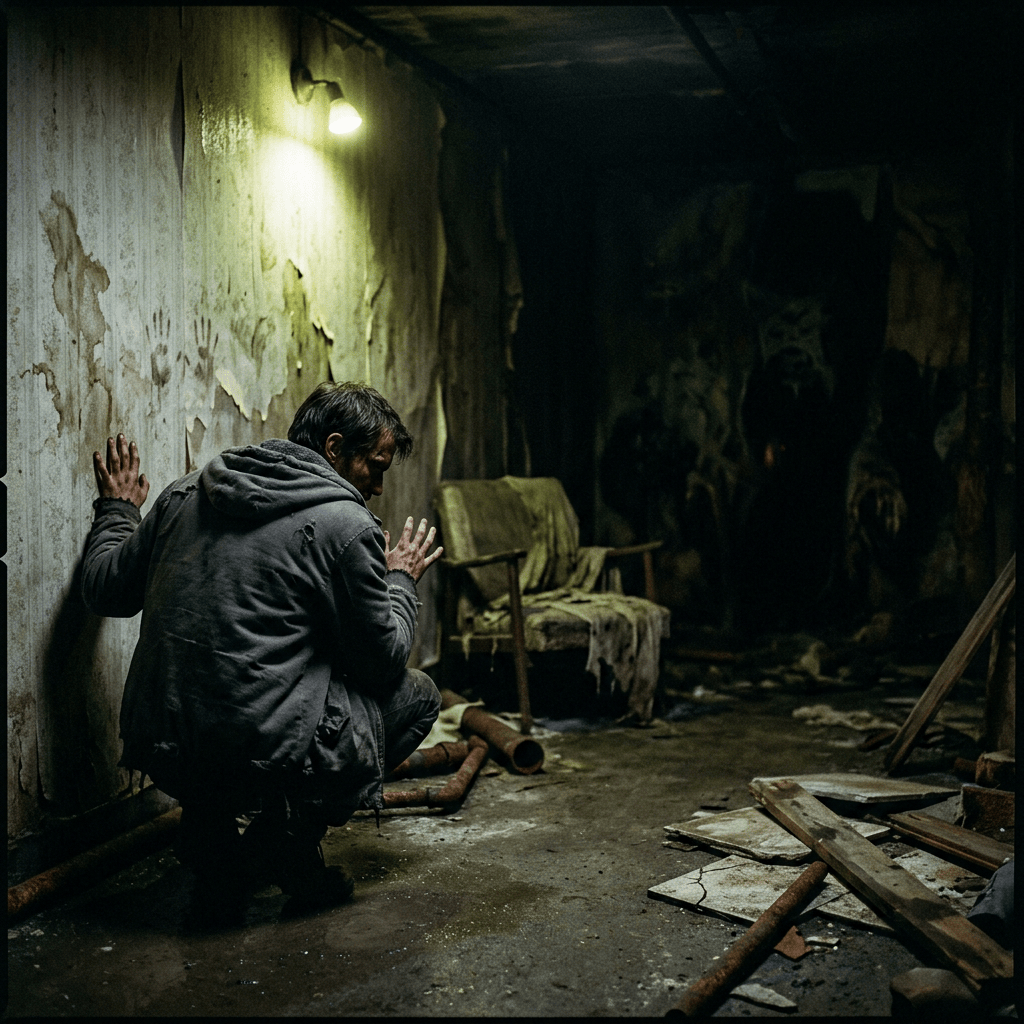
I know. Usually around this time of the year, I try to make my posts fit the theme in some way, but this month, I’ve kind of ditched that. On the bright side, though, there’s still a few days left of October so that means I still have time to jump in the argument of whether horror is a Christian genre.
This argument became a huge social media battle this year after Allie Beth Stuckey and Matt Walsh got into an argument about it on X, but really, it’s been going on for years. Many Christians are opposed to reading or watching horror, and I can see why. If it’s not gory to the point of stupidity, it’s blasphemous. Just look at Carrie, Steven King’s debut novel that’s had numerous movie adaptations. The main villain in that book is Carrie’s mother, Margaret, an abusive religious fanatic who serves as one of the main forces that pushes Carrie over the edge. In the book, not only does Margaret try to kill Carrie with a crucifix, but Margaret is crucified by Carrie with knives and other household objects. If that isn’t a subversion of Christ’s sacrifice on the cross, I don’t know what is.
However, what it seems that many Christians forget is that horror was, originally, a Christian genre, and it can serve as such today.
As one example, think about vampires. While vampire legends can be found in cultures all around the world, the version that we’re most familiar with stems from gothic fiction from the mid-late 1700s and 1800s. Many of these stories carried heavy Christian influences and motifs in them, especially in their lore. As a very obvious example, the entire idea of vampires being repelled by crucifixes comes from the idea that they are demonic entities and, in many ways, serve as the opposite of Christ. There’s also the fact that in Bram Stoker’s Dracula, Abraham Van Helsing – the hero – is a devout Christian, something that shapes much of character and motives.
Another example of horror as a Christian genre is Frankenstein by Mary Shelley. While, yes, the jury is out on whether Shelley was a Christian (she likely became more religious as she got older but was probably an atheist/agnostic when writing Frankenstein) the story draws upon many Christian motifs. In fact, in many ways, it’s a sort of sequel to Paradise Lost, and if you aren’t familiar with Genesis, much of Frankenstein may go over your head.
All of that said, much of the horror that we’re familiar with thanks to gothic literature was heavily influenced by Christianity, and, in many ways, it had to be. After all, horror is only terrifying because it acknowledges the existence of extreme evil in the face of extreme good. If you try to write horror from an atheist perspective, while it might play on our sense of morality or our basic fight-or-flight instincts and thus, be scary, it’s ultimately banal. Why should we be afraid of this evil thing beyond our basic survival instincts if ultimately, there is no solid definition of good or evil?
In order for horror to really mean something, there must be some higher authority that dedicates what good is, and that’s where the Christian influence in horror must come into play. If God does not exist, then true evil cannot exist.
Until next time,
M.J.
Discover more from The Tanuki Corner
Subscribe to get the latest posts sent to your email.


Have something to say? Leave a comment! (Verbal abuse and ad hominem will not be tolerated.)