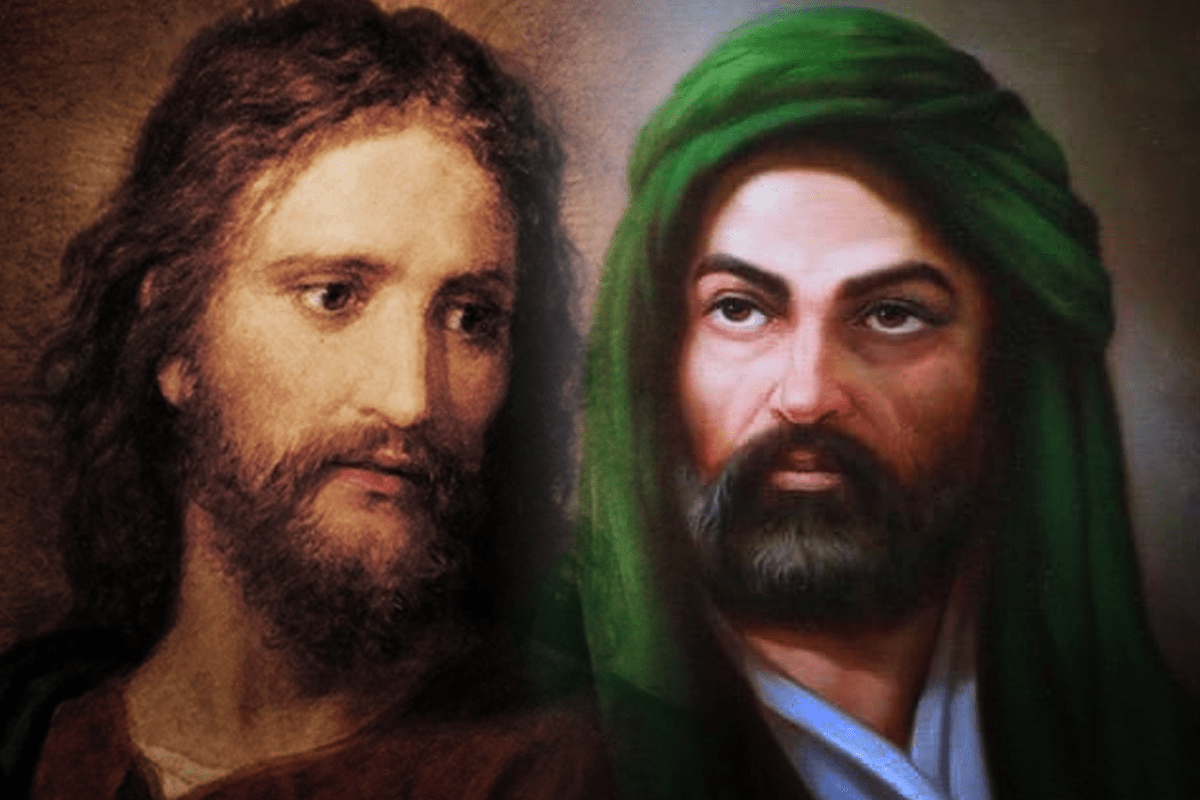
While epilepsy is a plausible explanation for Muhammad’s behavior, and an impossible one for Jesus’, another theory must be considered. The existence of personality disorders in both men has been suggested and it’s also worthwhile to examine the symptoms of them to see if they fit. Personality disorders exist when the patient’s way of thinking, perceiving, reacting, and relating to others becomes so pronounced, rigid, and maladaptive that they negatively affect work or interpersonal functioning. (9) Childhood trauma, verbal abuse, and cultural factors have also been linked to the development of personality disorders. (8) They can be identified by the lack of a clear, stable image of self, unrealistically high or low self-esteem, and an unawareness of how their thoughts or actions are problematic. (8) Patients may exhibit bad beliefs or actions, lack empathy or respect, and be emotionally detached or overly needy attention or care. (8) Their behavior may be inconsistent, frustrating, or confusing to others, and they may have issues understanding realistic and acceptable ways to treat others. (8) With the exception of anti-social personality disorder (which can appear as early as 11), personality disorders are identifiable by 18. (8) Left untreated, their disorders may result in poor relationships, occupational issues and impaired social functioning. (8) The ten different types of personality disorders are categorized by the DSM-5 into three main categories or “clusters.” (8)
The first category is known as Cluster A. (8) Cluster A personality disorders involve unusual or eccentric thinking or behavior. (8) Paranoid, schizoid, and schizotypal personality disorders fall into this category. (8) Paranoid personality disorder gives people a relentless, unmerited suspicion or distrust of others, with the belief that others are trying to demean, harm, or threaten them. (8) Schizoid personality disorder is less intense and is marked by a consistent pattern of detachment from or a general disinterest in personal relationships. (8) Patients with schizoid personality disorder usually have a limited range of emotions when with others. (8) Patients with schizotypal personality disorder experience a consistent pattern of discomfort and have a limited need for close relationships. Any relationships they have may be hindered by their distorted view of reality, superstitions, or strange behaviors. (8)
Meanwhile, Cluster B personality disorders involve dramatic or erratic and impulsive behavior and intense, unstable emotions. (8) The specific disorders that fall into Cluster B are antisocial, borderline, narcissistic, and histrionic personality disorders. (8)
Starting with the symptoms of antisocial personality disorder (ASPD), antisocial personality disorder is displayed by a lack of respect towards others and a rejection of social norms and rules. (8) people with ASPD may break the law, cause harm to others, and refuse to take responsibility or display regard for the negative consequences of their actions. (8) They may be deceitful, exploitative, and reckless, all for personal profit or pleasure with no remorse, usually justifying or rationalizing their behavior in some way. (8) They may steal, harass others, manipulate, con, or destroy property. (9) They do not think about the consequences for or safety of themselves or others, and may suddenly change jobs, homes, or relationships, consume excessive amounts of alcohol or take illicit drugs, are socially and financially irresponsible, irritable, physically aggressive, abusive towards their spouse or partner, or polyamorous. (9) They’re extremely opinionated, self-assured, and arrogant, but can act charming, voluble, and verbally facile to get what they want. (9) ASPD can also be comorbid with impulse control, mood, anxiety, gambling, and bipolar disorder, as well as ADHD. (9)
The cause of anti-social personality disorder is unknown, though scientists believe that genetic and environmental influences may contribute to the development of ASPD. (9) It’s more often found among 1st degree relatives of patients who also have it than in the general population. (9) Children who have been abused or neglected, or who had parents with inconsistent disciplining or parenting styles, are at increased risk of developing it. (9)
To be diagnosed with ASPD, one must have a persistent disregard for the rights of others and the law, deceitfulness indicated by repeated lying, use of aliases, and conning for personal gain. (9) There must also be impulsivity, irritability and aggression (constantly getting into physical fights and assaulting others), recklessly disregarding the safety of self or others, constant irresponsibility, and a lack of remorse. (9) These symptoms must be present before the patient is 15 years old. (9)
Meanwhile, borderline disorder is marked with difficulty regulating emotions, low self-esteem, mood swings, impulsivity, and relationship difficulties. (8) Symptoms of borderline disorder can also overlap with those presented in histrionic or narcissistic personality disorder and is commonly misdiagnosed as bipolar disorder. (9) Patients with borderline personality disorder often feel furious or panicky when they feel abandoned, even if it’s for something small (like being slightly late.) (9) They may change their view of a person abruptly after a period of idealization, suddenly demeaning the other person. (9) Another trait of borderline personality disorder is that they have difficulty controlling their anger, becoming disproportionately angry, for which they will feel ashamed. (9) They may often self-sabotage, dramatically change their self-image, feel empty inside, self-mutilate or attempt suicide, and may have dissociative episodes, paranoid thoughts, or psychotic symptoms (such as hallucinations.) (9) The cause of this is most linked to childhood separation from caregivers, the death of a parent, and physical or sexual abuse. (9)
Histrionic personality disorder can be identified if the patient has intense, unstable emotions, a distorted self-image, dramatic, inappropriate, and attention-seeking behaviors, and self-esteem that’s dependent upon the approval of others. (8) They may use their physical appearance and act inappropriately in seductive or provocative ways. (8) Their emotions are persistently excessive, and rapidly shifting or shallow. (9) They are uncomfortable when they’re not the center of attention, are highly suggestible, theatrical and self-dramatizing, and interpret relationships as more intimate than they are. (9)
Narcissistic personality disorder is like histrionic personality disorder and involves a consistent pattern of perceived superiority or grandiosity, need for praise or admiration, and a lack of empathy. (8) Narcissists have difficulty regulating their self-esteem, needing praise and affiliations with special people or institutions to maintaining their self-esteem and is more common in men than women. (9) Narcissists overestimate their abilities and exaggerate their achievements, thinking they’re superior, unique or special. (9) They are preoccupied with fantasies of great achievements and feel they should only associate with others as special as themselves to support or enhance their self-esteem. (9) Narcissistic people may respond with rage or contempt or vicious counterattacks to criticism or avoid situations where they may fail. (9) To be a diagnosed narcissist, you must have a persistent pattern of grandiosity (exaggerated, unfounded sense of their own importance), preoccupied with fantasies of unlimited achievements, belief that they are special or unique, need to be unconditionally admired, exploit others, lack empathy, envy others, and are arrogant or haughty. (9)
Cluster C personality disorders involve severe fear and anxiety, with avoidant, obsessive-compulsive, and dependent personality disorder. (8) Avoidant personality disorder is marked by chronic feelings of inadequacy, and patients are highly sensitive to being negatively judged, avoiding social interaction for fear of rejection. (8) Obsessive-compulsive personality disorder (OCPD) is marked by an extreme, consistent need for orderliness, perfectionism, and control, (8, 9) with a severe focus on rules, minute details, procedures, schedules, and lists to maintain a sense of control. (9) They repeatedly check for mistakes and pay extraordinary attention to detail, so much so that they may neglect other aspects of life. (9) They tend to be solitary in their endeavors; mistrusting others’ help and are rigid and stubborn in their activities. (9) They’re overly dedicated to work and productivity so much that leisure and relationships are neglected. (9) Time spent with friends tends to be formally organized activities and hobbies or recreational activities are viewed as important tasks requiring organization and hard work. (9) Affection is expressed in informal, stiff, or serious ways, and OCPD patients are intolerant of emotional or expressive behavior, overzealous, picky, and rigid on issues of morality, ethics, and values, applying rigid moral principles to themselves and others. (9) It’s different from OCD because OCPD patients don’t recognize the need to change. (8)
Dependent personality disorder involves a constant excessive need to be cared for by someone, submissiveness, constant reassurance, and inability to make decisions. They people-please, and display passive or clinging behavior. (8)
From even a cursory overview of Cluster A personality disorder, one can conclude that neither man exhibited a Cluster A personality disorder. Jesus had deep, stable relationships with many people. (3, 21) His predictions about His death, though critics have interpreted it as paranoia, were completely justified. (3) Likewise, Muhammad also had close relationships with many people and showed no pervasive paranoia. Thus, the analysis must shift to Cluster B and C disorders.
An analysis of the symptoms of Cluster B and C disorders shows Jesus’ life does not reflect any disorder from these categories either. Though Jesus was accused of being insane by his contemporaries, (Mark 3:21-22, John 10:20) (3) His responses to these accusations in passages such as Mark 3:31-35 and Matthew 12:46-50 are rational and calm. (3) Additionally, no mentally ill or evil person would have been able to speak or behave the way Jesus did. (21) All the evidence points to Him being a well-adjusted, mature person, with His words and deed never being in conflict with each other. (21) He was faultless in conduct, and all His virtues were perfectly in line with divine perfection. (14) He was always in control of Himself, even after betrayal; (Matthew 26:53-56) (3, 18) His teachings were not that of a lunatic; (i.e. “The Sermon on the Mount”) (3, 18) and He always demonstrated a concrete understanding of His identity and mission. (John 8:23) (3, 18)
So strong is the evidence that Jesus was not insane that even Bart Ehrman, one of the most prominent agnostic atheists in recent memory, said, “The reality is that a lot of people today who are predicting the imminent end of the world may have a few screws loose. But the kinds of expectations that Jesus held about the coming kingdom of God in a cataclysmic display of divine force were not ‘weird’ or ‘way out there’ or ‘psycho’ in his day. They were fairly common. Unless you want to say that all apocalyptic Jews were clinically crazy, I don’t think you can say Jesus was.” (Paragraph 18) (20) He continues in the next paragraph, “And he may well have thought (I think he did think) that he would be made the messiah in a future kingdom. That may have been a rather exalted view of himself, but I don’t think it makes Jesus crazy. It makes him an unusually confident apocalyptic prophet. There were others with visions of grandeur at the time. I don’t think that makes him mentally ill. It makes him a first-century apocalyptic Jew.” (Paragraph 19, sentence 7-12) (20) Christian apologist, Don Stewart, also writes “A pathology of Jesus is possible only upon the basis of a lack of acquaintance with the course and conclusions of New Testament criticism and an amateur application of the principles of the science of psychiatry.” (19) (Paragraph 25)
Further supporting that Jesus was not insane is that Romans didn’t execute people for insanity. (19) This theory was posed by Justin Meggit, a lecturer from the University of Cambridge, in his book The Madness of King Jesus: Why was Jesus Put to Death by His Followers Were Not? that Pilate and other Romans thought Jesus was insane and was executed as a royal pretender. (19) However, this explanation is insufficient as the Romans’ standard procedure was also to execute any would-be insurgents with their leaders. (19)
However, as with the accusations of epilepsy, Muhammad has a much harder time standing against the accusations of having some sort of personality disorder. Though the Muslim world views him as the greatest prophet in history, the universal messenger to all mankind, a perfect example of human behavior beyond reproach, sinless, but not without human failings, sent to present and confirm the monotheistic teaching preached in previous Abrahamic religions, (11, 14) history paints a different story. When one looks at the historical accounts of Muhammad’s life, we see a man whose behavior was flawed at best and utterly reprehensible at worst.
Muhammad was born in Mecca to a man named Abdullah (who died before he was born) and Aaminah on the 12th of Rabi-al-Awwal (around the 20th or 22nd of April 571.) (10) His grandfather, Abdul Muttalib, was the one who named him and took Muhammad to the Ka’ba where he performed Aqeeqah, praying to Allah for Muhammad’s health and long life, and giving thanks for his birth. (10) Aaminah, after suckling him for the first 7-9 days of his life, sent him to be brought up in the desert to become stronger and healthier. (10) He was given to a wet nurse named Halima, who was part of the Banu Saad branch of the Hawazin tribe. (10) His childhood was eventful, as numerous people attempted to kidnap or kill him, with some saying that he would become a king otherwise. (10) He stayed with Halima for an extended time by her request, (10) but Muhammad was eventually returned to his mother around the time he was five or six years old. (10) This time with his mother would be sadly short lived, as Aamina died on the return journey from Medina at Abwa, a village near Al-Juhfa, though some believe she died at Mecca when Muhammad was about 6-8 years old. (10)
After this, he lived happily with Abdul Muttalib and his aunts Hamzah and Safiyah, who were about his age. (10) This lasted for two years, and after Muttalib died, Muhammad was sent to live with his uncle, Abu Talib, the leader of the Hashim tribe, and his wife, Fatimah bint Asad. (11)
From there, Muhammad became a shepherd, then a merchant, working for a wealthy woman named Khadija, who was a third cousin of Muhammad’s mother and had three children from previous marriages. (11) He married her in 595 AD at the age of 25. (11) It was during his marriage to Khadija that he would be visited by Gabriel and commanded to recite verses from Allah. (11) In response, he believed he was possessed by a demon, became suicidal and repeatedly tried to jump off a cliff according to Sahih Bukhari. (11) More suicide attempts were made when the revelations stopped. (11)
Muhammad soon began sharing his revelations and initially gained a few followers. (11) After Abu Talib died, he fled Mecca to Medina to escape persecution from the polytheists in Mecca, who were accusing him of plagiarizing the stories of the ancients, also stealing from those of Abrahamic faiths, and claimed that he was illiterate. (11) During this time, his revelations read poetry, but alterations in the content of the verses followed Muhammad’s rising place in society. (11) The gradually became more straight forward and violent as he gained power, with these later revelations abrogating the earlier ones. (11) Once in Medina, he united the tribes there under the constitution of Medina and ordered his followers to not contact their relatives in Mecca and cut ties with non-Muslim relatives. (11)
While going to Medina, in March 624 AD, Muhammad and about 300 converts raided a Meccan merchant caravan, which led to the Battle of Badr when the Meccans retaliated. (11) The Muslims were victorious, killing 70 Meccans and taking 70 more as prisoners for ransom. (11) Surah 33:26 celebrates this victory, saying that Allah cast terror in their hearts so the Muslims could win. (14) In 629 AD, Muhammad invaded Mecca with ten-thousand men and won the city. (11) Three years later, in 632 AD, he became infirm with severe head pain and weakness, which may have been caused by an earlier event in which he was poisoned by a Jewess after the conquest of Khaybar. (11)
After Khadija died, Muhammad became known for being a womanizer, (11, 14) having at least nine wives by the end of his life (14) (though some say he had fifteen wives (11) and numerous concubines, including a Coptic slave named Mariyah. (11) He was 50 when he married who was possibly his first new wife, Sauda bint Zam’ah, and married Aisha around this time, though there’s evidence that he may have married Aisha first after Khadija died. (Sahih Muslim volume 2, page 748) (14) Aisha was his favorite wife, and she was soon disturbed by Muhammad’s growing number of wives after he married his fourth wife. (14) Inevitably, his many marriages and favoritism between them caused great jealousy and dissention amongst his wives. (14)
This causes problems for Muhammad since in Sahih Muslim volume 4, page 1260, Muhammad said he was the most like Jesus out of “the whole of mankind.” (14) He even tried to outdo Jesus in Sahih Muslim volume 4, page 1230, says that he would be “preeminent among the descendants of Adam on the Day of Resurrection” and would serve as an intercessor for mankind. (14) While polygamy and caravan raiding were common facts of life in 7th-century Arabia, Muhammad was posited as a universal prophet and guide of mankind, making him subject to absolute standards. (14) However, he never condemned those practices, which stands in contrast to his claim to be like or outdo Jesus in morality. (14)
Furthermore, Muhammad’s wives Aisha and Zaynab bint Jahsh provide huge issues for Muhammad’s claim to be like Jesus. To start with Aisha, she was six when Muhammad married her according to the Hadiths after Muhammad allegedly had a dream about her twice in which she was drawn on a piece of silk. (1, 12) Thus, after Muhammad managed to convince her father, Abu Bakr, to go along with it, he married her and consummated the marriage when she was 9. (1, 12) She became his favorite wife, so much so that Muhammad’s other wives had to beg for equal treatment, causing dissention. (1, 12)
This is particularly startling as by all accounts; Muhammad was a pedophile. The practice of marrying girls young, especially once they hit puberty was common in pre-Islamic Arabia, but Muslims hold that Muhammad condemned their immorality. (12) If true, this also makes him a hypocrite. To get out of this, Muslims argue that he married Aisha as a part of Allah’s plan so Aisha could help girls her age with questions about sexual ethics and morals, and so her personality and life could be shaped by Muhammad so she could serve Allah well. (12) However, on this front, Muhammad didn’t have sufficient reason for Allah to ordain the marriage since he could have simply outlawed sex with young girls so girls Aisha’s age wouldn’t have to worry about it. (12) He also could have decreed that one had to wait until puberty to marry a girl. (12) Muslims have also argued that Muhammad married her because she was a precocious girl, but hadiths do not support this, as she seemed like a normal girl and Surah 65:4 of the Quran already allows pre-pubescent marriage. (12) There are also a few hadiths that say that Muhammad had a liking for young girls. (12) One of them says, “When I took the permission of Allah’s Apostle (the blessing and peace of Allah be upon him), he asked me whether I had married a matron. He said: ‘Why hadn’t you married a virgin that would play with you, and you would play with her?’” (Paragraph 22, sentence 1-2) (12) This not only terrible for Aisha because of the effects on her health, but because Muhammad was already old, marrying Aisha doomed her to a life of widowhood since Surah 33:53 prohibits marrying his widows. (12)
Moving on to Muhammad’s marriage to Zaynab bint Jahsh, this marriage was in direct opposition to Jesus’ teaching in Luke 16:18 and Mark 10:9 which both condemn divorce. (3, 14) Zaynab was originally the wife of Muhammad’s adopted son, Zaid. (14) Muhammad lusted after her and told his son, who divorced her, and after Zaynab’s waiting period between divorce and remarriage, Muhammad married her as recorded in Sahih Muslim 1428b. (1, 14)
The way that Muhammad reacted to criticism and resistance is also extremely telling. Most of the individuals assassinated by Muhammad were killed for their satire against him or their challenges to his claim to be the prophet of Allah. (14) An-Nadr ibn al-Harith was assassinated by Muhammad for ridiculing the Quran and reciting Persian legends that were more beautiful than Muhammad’s recitations after the Battle of Badr. (14)
Ka’b ibn Ashraf was another victim of Muhammad’s. (14) He was a Jewish resident of Medina who composed satirical verses against Muhammad, using his talent in Mecca to get the Quraysh tribe to rise against Muhammad in response to the Battle of Badr. (14) Sahih Bukhari volume 4, page 168, Sahih Bukhari volume 5, page 248, Ibn Ishaq’s Sirat Rasulullah page 367, and Ibn Sa’d in Kitab al-Tabaqat al-Kabir volume 2, pages 36-37 all record Muhammad’s order for Ashraf’s death and the subsequent assassination. (14) Muhammad ordered his followers to kill Ashraf using any method necessary, including through lying and trickery. (14) Sahih Muslim volume 3, page 99 and Ibn Sa’d in Kitab al-Tabaqat al-Kabir volume 2, pages 36-37 record that Muhammad’s followers did lie to lure Ashraf into the trap that led to his murder. (14)
Abu Rafi, the leader of the Banu Nadhir tribe was killed in Khaybar in a similar manner to Ashraf according to Sahih Bukhari volume 5, pages 253-254 and Ibn Ishaq in Sirat Rasulullah page 483. (14) Al-Harith ibn Suwayd ibn Samit and ‘Asma bint Marwan both died for satire, too. (Sirat Rasulullah pages 675-676) (14) Muhammad also allowed a follower of his named al-Zubayr, to torture a man to find out where a large sum of money was hidden. (14) When it was clear that there was nothing to be gained, Muhammad had him decapitated. (14)
Additionally, not only did Muhammad curse the Jews, but he also cursed the Christians (Surah 9:30), the opposite of what Jesus did in Luke 6:27-28, 9:55, 23:34. (3, 14) Muhammad’s initial contact with Christians were less frequent compared to his interactions with the Jews. (14) From his experience with the Negus of Abyssinia, he originally treated Christians more favorably, regarding them as potential friends and allies, as shown in Surah 5:85, 22:40, and 30:4. (2, 14) This soon turned into antagonism as the Christians began challenging his claims to prophethood, specifically having issues with the Quran ignores the doctrine of Jesus’ atonement on the cross, (Surah 5:54, 60) and the ubiquitousness of the name “Maryam,” which is used both for the name of Moses’ sister and Jesus’ mother. (Sahih Muslim volume 3, page 1169) (14)
Later, during the clash with the Byzantines in Muhammad’s final years, Muhammad reviled the Christians for kufr (Surah 5:75-76) and in Sahih Muslim volume 3, page 965 and Muwatta Imam Malik 371, he so greatly hated the Jews and Christian that he commanded their expulsions. (14) As he was dying, he gave instruction to his follower, ‘Umar, to ensure the Jews would be driven out of the Arabian Peninsula. (14)
Perhaps the bloodiest example of Muhammad’s evil is what he did to the Medinan Jews (11) after the Battle of the Ditch, (14) also known as the Battle of the Trench, which took place in 627 AD. (11) After this battle and the ensuing siege, Muhammad led a wholesale massacre of the prisoners. (Ibn Ishaq, Sirat Rasulullah page 464 and Ibn Sa’d Kitab al-Tabaqat al-Kabir volume 2 page 93) (14) Muhammad ordered the men and boys to be beheaded, and the women and young children were sold into slavery. (11) According to al-Tabari, many of the heads were personally severed by Mehammed, filling a trench as they were brought to him. (11) Wiki Islam writes: “One of the explanations given by some Arab historians and biographers for Muhammad’s treatment of the Jews of Medina is that ‘the punishment of the Medina Jews who were invited to convert and refused, perfectly exemplify the Qur’an’s tales of what happened to those who rejected the prophets of old.’” (Paragraph 24) (11)
Muslims try to argue that this was standard procedure for military leaders, but it hardly fits into the standard of conduct that Jesus laid out. (14) Though many Old Testament prophets acted callously, Muhammad was expressly comparing himself to Jesus, who never behaved callously, much less beheaded hundreds of people. (14) From this we can see that Muhammad and his companions’ actions line up closer to the words of Jesus in John 3:19-20, 8:44, and Ephesians 5:12. (3, 14)
By even these few events in Muhammad’s life, it’s easy to believe that he may have had a personality disorder that falls into Cluster B. Certainly, Cluster A can be ruled out since, while Sahih Bukhari 3562 describes him as being “shier than a virgin girl,” (1, 11) he did not seem to exhibit paranoia or have issues with his relationships of the type experience by those with Cluster A personality disorders. Cluster C can also be largely ruled out, with the exception of obsessive-compulsive personality disorder. Thus, it’s possible that Muhammad could have had narcissistic, borderline, anti-social, or histrionic personality disorder, with the most plausible one being borderline. From historical accounts of his life, he was constantly abandoned as a child, he was callous, didn’t respond well to criticism, was self-seeking, controlling, a womanizer, a pedophile, was suicidal, etc.
Another theory as to why Jesus and Muhammad said the things they did is that they may have had dissociative identity disorder (DID). Dissociative identity disorder was formerly known as multiple or split personality disorder and is extremely rare, with a small U.S. study finding that it only affects 1.5% of people. (16) Typically, it’s caused by severe trauma, stressful experiences, or abuse during childhood which forces the patient to develop two or more separate personalities as a coping mechanism. (16) These personalities – known as “alters” – may have different behaviors, memories, thought patterns, expressions, ethnicities, and ways of interacting with things. (16) These alters control the patient’s behavior at different times. (16) Memories may not transfer from one personality to another, leaving gaps in the patient’s memory as personalities switch in response to different triggers. (16) Symptoms of DID begin to appear between five to ten years old and are commonly overlooked by parents, guardians, and family members, and often mistaken for other disorders such as ADHD. (16) Symptoms include feeling detached from reality, confused by what others say about your behavior, stress from not being in control, feeling like you’re watching yourself from the outside, and amnesia. (16)
There are two forms of dissociative identity disorder, called possession and non-possession. (16) During possession, the alters or identities present as though an outside entity took control of the body, with the patient speaking or acting differently in a way that’s obvious to others. (16) In non-possession, the identities are less known to others, with patients feeling like they are having an out-of-body experience, unable to control their speech, emotions, or behaviors. (16) In both cases, the switch is unwanted or involuntary. (16) Because of this, DID is often accompanied by anxiety, delusions, depression, self-harm, suicidal ideation, and substance abuse disorder, with more than 70% of DID patients attempting suicide or self-mutilating. (16)
Like with the other accusations of epilepsy or the existence of various personality disorders, there is no evidence from Jesus’ life, actions, or words to support His having dissociative identity disorder. From the Gospels, we know that He likely had a stable family life, had a solid understanding of who He was, understood His mission, and never seemed to switch from one identity to another. (3)
On the other hand, Muhammad has more to support the possibly of having dissociative identity disorder. He was given away as a baby, had people trying to kidnap or kill him, was sent back to his mom, soon orphaned, raised by his grandfather until he passed, then was sent to his uncle. This could have set up the foundation for developing DID, but because of how well-timed some of his revelations were and the involuntary nature of DID, doubt can be reasonably cast on this diagnosis. For example, in Sahih Bukhari 4788, Aisha comments, “I feel that your Lord hastens in fulfilling your wishes and desires,” (1) in response to Muhammad’s revelation of Surah 33:51 (2) which helped justify his marriage to Zaynab bint Jahsh.
Additionally, the very existence of dissociative identity disorder is widely disputed amongst doctors, with many saying that it’s not a real disorder. Thus, further doubt can be put on this diagnosis for both Jesus and Muhammad.
However, if neither man were epileptic or insane, this leaves what’s possibly the oldest and most serious accusation against either of them: demon possession, which will be discussed in the next post.
Until next time,
M.J.
Discover more from The Tanuki Corner
Subscribe to get the latest posts sent to your email.


Bibliography:
https://quranyusufali.com Title: The Holy Quran By: Ali, Yusuff A. Written: 1946. Copyright: 1946, 2008-2026. Accessed: 2/2/2026 (2)
https://www.answering-islam.org/authors/gilchrist/muhammad/chapter3.html Title: His Personality: The Character of Muhammad By: Answering Islam. Written: Unknown. Copyright: Unknown. Accessed: 2/2/2026. (14)
https://answering-islam.org/Authors/JR/Future/ch11_the_dark_nature.htm Title: The Dark Nature of Muhammad’s Revelations By: Answering Islam. Written: Unknown. Copyright: Unknown. Accessed: 2/2/2026. (22)
https://www.sciencedirect.com/science/article/pii/51525505019310844 Title: Did Prophet Mohammad (PBUH) have Epolepsy? A Neurological Analysis By: Aziz, Hasan. Written: 10/9/2019. Copyright: 2019. Accessed: 2/2/2026. (7)
https://www.epilepsy.com/stories/epilepsy-and-psychological-disorders Title: Epilepsy and Psychological Disorders By: Benbadis, R. Selim (MD); Rodriguez, Mora Karla (MD). Written: 11/15/2016. Copyright: 2024 Epilepsy Foundation. Accessed: 2/2/2026 (4)
https://www.biblegateway.com Title: Bible Gateway By: Unknown. Written: Unknown. Copyright: Unknown. Accessed: 2/2/2026. (3)
https://my.clevelandclinic.org/health/diseases/9792-dissociative-identitiy-disorder-multiple-personality-disorder Title: Dissociative Identity Disorder (Multiple Personality Disorder) By: Cleveland Clinic. Written: 6/7/2024 (last updated). Copyright: 2026 Cleveland Clinic. Accessed: 2/2/2026. (16)
https://my.cleveladclinic.org/health/diseases/9636-personality-disorders-overview Title: Personality Disorders. By: Cleveland Clinic. Written: 4/16/2022. Copyright: 2026 Cleveland Clinic. Accessed: 2/2/2026. (8)
https://ehrmanblog.org/some-intriguing-questions-about-jesus-predictions-and-mental-health/ Title: Some Intriguing Questions about Jesus’ Predictions and Mental Health By: Ehrman, Bart. Written: 6/29/2021. Copyright: 2021 The Bart Ehrman Blog. Accessed: 2/2/2026. (20)
https://www.kevinhalloran.net/c-s-lewis-quote-on-jesus-as-liar-lunatic-or-lord/ Title: C.S. Lewis Quote on Jesus as Liar, Lunatic, or Lord from Mere Christianity By: Halloran, P. Kevin. Written: 4/21/2014. Copyright: 2025 Anchored in Christ. Accessed: 2/2/2026. (17)
https://www.mayoclinic.org/diseases-conditions/epilepsy/symptoms-causes/syc-20350093?cjdata=MXxOfDB8WXww&cjevent=1da342b5006911f183c600030a1eba9b&cm_mmc_CJ-_-100357191-_-5250933-_-Evergreen+Link+for+Mayo+Clinic+Diet&utm_source=cj&utm_content=100357191&utm_capaign=3-months Title: Epilepsy. By: Mayo Clinic. Written: 10/14/2025. Copyright: 1998-2026. Accessed: 2/2/2026. (5)
https://pmc.ncbi.nlm.nih.gov/articles/PMC8032418/ Title: Psychiatric Comorbidities in People with Epilepsy By: Mula, Marco; Kanner, M. Andres; Jette, Nathalie; Sander, W. Josemir. Written: 4/11/2021. Copyright: 2020 American Academy of Neurology. Accessed: 2/2/2026. (6)
https://www.blueletterbible.org/faq/don_stewart/don_stewart_1340.cfm Title: Is It Possible that Jesus was Insane? By: Stewart, Don. Written: Unknown. Copyright: 2026 Blue Letter Bible. Accessed: 2/2/2026. (18)
https://answering-islam.org/Silas/demons.htm Title: Muhammad and the Demons By: Silas. Written: 6/18/1998. Update: 10/10/2001. Copyright: Unknown. Accessed: 2/2/2026. (13)
https://www.christiantoday.com/news/mad-or-god-a-senior-psychiatrist-on-the-mental-health-of-jesus Title: Mad or God? A Senior Psychiatrist on the Mental Health of Jesus By: Sims, Andrew. Written: 7/17/2018. Copyright: 2026 Christian Today. Accessed: 2/2/2026. (21)
https://www.blueletterbible.org/faq/don_stewart/don_stewart_59.cfm Title: What Happens When a Person is Demon Possessed? By: Stewart, Don. Written: Unknown. Copyright: 2026 Blue Letter Bible. Accessed: 2/2/2026. (15)
https://sunnah.com Title: Sunnah.com. By: Unknown. Written: Unknown. Copyright: Unknown. Accessed: 2/2/2026 (1)
https://muhammadencyclopedia.com/article/infancy-and-childhood-of-prophet-muhammad Title: Infancy and Childhood of Prophet Muhammad – Early Life By: Uddin, Rafi Shah Mufti. Written: 9/8/2022. Copyright: Unknown. Accessed: 2/2/2026. (10)
https://wikiislam.net/wiki/Muhammad_ibn_Abdullah Title: Muhammad ibn Abdullah By: Wiki Islam. Written: (Updated) 11/12/2025. Copyright: Unknown. Accessed: 2/2/2026. (11)
https://answering-islam.org/Authors/Wood/pedophile.htm Title: Was Muhammad a Pedophile?An Examination of Muhammad’s Relationship with a Nine-Year-Old Girl. By: Wood, David. Written: Unknown. Copyright: Unknown. Accessed: 2/2/2026. (12)
https://en.wikipedia.org/wiki/Mental_health_of_Jesus Title: Mental Health of Jesus By: Wikipedia. Written: 1/31/2026 (last updated). Copyright: Unknown. Accessed: 2/2/2026. (19)
https://www.msdmanuals.com/professional/psychiatric-disorders/personality-disorders/overview-of-personality-disorders Title: Overview of Personality Disorders By: Zimmerman, Mark. Written: September 2023. Modified: January 2026. Copyright: 2026. Accessed: 2/2/2026. (9)
LikeLike