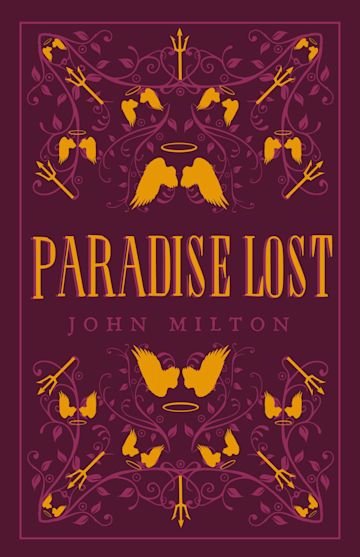
Paradise Lost by John Milton is one of the greatest works in the English Language due to its interactive structure, theological exploration, magnificent storytelling, and lasting influence on literature and media. In fact, this book even had great influence on Mary Shelley’s Frankenstein (my review of which I’ll repost tomorrow). It’s a retelling of the Fall of Man recorded in Genesis and following this month’s theme, it feels fitting to review the two worldviews that it plays on.
Paradise Lost mainly focuses on Lucifer (a.k.a Satan) as it’s anti-hero (which is also one of the reasons why the Satanic Temple loves this book so much, but I digress). Milton drew from what the Bible said about Satan’s fall from Heaven but adds more detail to the whole thing. To sum up, he was originally one of the most important angels in Heaven, got too puffed up, and decided he could do a better job ruling than God. So, he rallied some other angels to himself and there was a big war in which God won and Satan and co. were thrown into Hell. At first, Lucifer feels bad for this since he also got a bunch of his cronies in trouble but famously decides that it’s “better to rule in Hell than to serve in Heaven,” and becomes hellbent (pun intended) to drag everyone down with him, leading him to corrupt God’s creation.
This book plays on the pagan view of heroism when it makes Satan the hero of the book. In pagan works such as Homer’s The Iliad, the Hindu Ramayana, or the plethora of other myths we have, heroism is usually based on strength and ambition. For example, in The Iliad, Achilles is the hero even though he’s a terrible person. The reason for this is because he’s the strongest person on the battlefield, thus excusing his arrogance, pride, spoiled behavior, and bloodlust. Another example is if we look at Norse mythology, Valhalla is the resting place for the dead, but only if they die in battle. It’s a land of feasting, honor, and revelry. However, if they die in any peaceful way, they go to Helheim, ruled by Hel, the cold and uncaring goddess of death. It’s dark, cold, and overall boring and when Ragnarok comes, your finger and toenails get to be used to build Naglfar, the Ship of the Dead.
Paradise Lost takes from this view. Lucifer is the hero in this view because he exhibits all the traits of the pagan heroes. He’s ambitious, powerful, and charismatic, pulling together a large force to fight God. When he fails, it’s seen as a tragic defeat, and when he starts becoming more bitter and unhinged, he’s seen as a tragic hero.
So, now that’s we’ve covered the pagan view of heroism in Paradise Lost, we also have to look at the Christian view that Milton also played on in this book. In the Christian view, God is the good King and his creation, Adam and Eve, are his buddies and the true tragic heroes of the story. They just live in the Garden, chilling, taking care of the rest of creation, being adorable, and hanging out with God. They are the ideal example of what Man could’ve been had he not disobeyed and had kept in perfect relationship with God. When Eve is tricked by Lucifer in the form of the snake, and later convinces Adam to eat the fruit, it’s a tragic downfall for them.
However, though this makes them tragic heroes in the Christian sense, the reason why they’re still considered heroes is because they still represent hope for humanity. They might’ve fallen from grace, but from them comes hope for redemption through one of their offspring.
Until next time,
M.J.
Discover more from The Tanuki Corner
Subscribe to get the latest posts sent to your email.
 The Tanuki Corner
Have something to say? Leave a comment! (Verbal abuse and ad hominem will not be tolerated.)