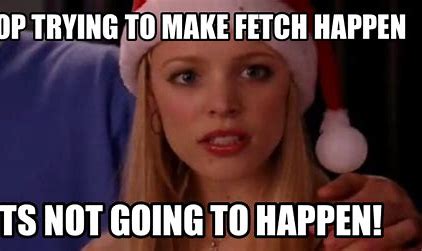
In honor of it being Mean Girls Day, the unofficial holiday inspired by the only date that’s ever given to us in the movie, I thought it would be a good idea to review the hit 2000s comedy Mean Girls. Originally, I wanted to release this post this summer since that was when the reboot was coming out but decided against it since I wouldn’t be watching the musical anyways. So now, it’s time to review the movie that takes a look at the complexities of female-female friendships.
#1: PG-13?
Even though this movie isn’t rated-R, for a PG-13 movie, it can be pretty raunchy at times. Much of this makes sense due to the plot taking a look at the stereotypes and slurs used by girls to degrade other girls (especially the slut stereotype), but if you have younger siblings around, this might be more of a movie to watch on your phone, not the T.V. There’s also a lot more sexual innuendo and jokes than I remembered from my first time watching the movie, which once again makes it a movie for older teenagers.
#2: The Plot
The plot of Mean Girls surrounds Cady, a 16-year-old entering her junior year of high school. After being homeschooled all her life in Africa, she’s sent to an American high school and is completely culture shocked as she realizes how nuts it is (which, as a homeschooler, is so accurate. I’ve never been in public high school, but I’m often super weirded out by the stories I hear from friends who are). She soon makes friends with Janice Ian and Damian Hubbard, who introduce us to the main antagonists of the story, the Plastics: Regina George, Gretchen Wieners, and Karen Smith. Janice tells Cady that they’re the worst people imaginable and when Cady is invited to sit with the Plastics at lunch, Janice hatches a plan to use Cady to spy on them and learn their secrets so she can get revenge, which sets up the story from there.
As I’ve said before, Mean Girls is a fairly realistic case study in how women interact with each other, especially when they are all super insecure. We’ve all seen the meme that preaches that women know what women are and they hate each other, and that basically sums up the entire movie. Cady becomes friends with Janice, who is insecure about a rumor that Regina spread that she was a lesbian, uses Cady as a weapon in her psychological warfare against Regina, who – just like Janice – is super insecure about herself (just like the other girls which is made very apparent throughout the movie), but takes it out on others by putting them down so she can look better than everyone else. Cady, who has now been thrown into the middle of all of this, is pressured to conform to their differing standards and becomes a Mean Girl by inadvertently hurting Janice by not going to her art contest and intentionally ruining Regina’s image by making her gain weight, sabotaging her skin care, stealing her boyfriend, Aaron Samuels (which you could argue was for the best since Regina was cheating on him the entire time), etc.
However, while this movie shows the worst parts of female psychology, it also ends on a lighter note when everyone apologizes to each other after the contents of the infamous “Burn Book” are spread all over the school. The girls are forced to talk about their feelings and insecurities, which helps fosters healing in friendships that had previously been varying levels of toxic. Cady apologizes to everyone she hurt, and the Plastics are disbanded, allowing the main characters to start treating each other as humans again, with sympathy and compassion. It shows us that there are layers to people, that all of us are insecure about something, and that it’s wrong to make others insecure about themselves just to feel better about ourselves.
#3: The Comedy
For a movie that came out in 2004, the jokes still land really well. While there are some jokes that probably don’t make much sense to today’s generation (such as three-way phone calls), other jokes are still widely recognized and laughed at, such as:
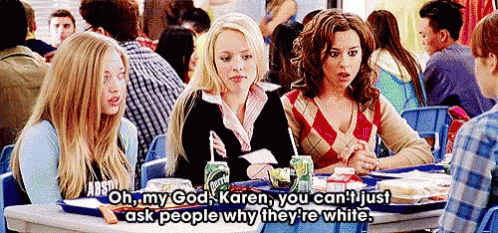

etc.
The writing throughout this movie has made it iconic for 20 years now and I would absolutely recommend watching it.
Until next time,
M.J.
Discover more from The Tanuki Corner
Subscribe to get the latest posts sent to your email.
 The Tanuki Corner
Have something to say? Leave a comment! (Verbal abuse and ad hominem will not be tolerated.)