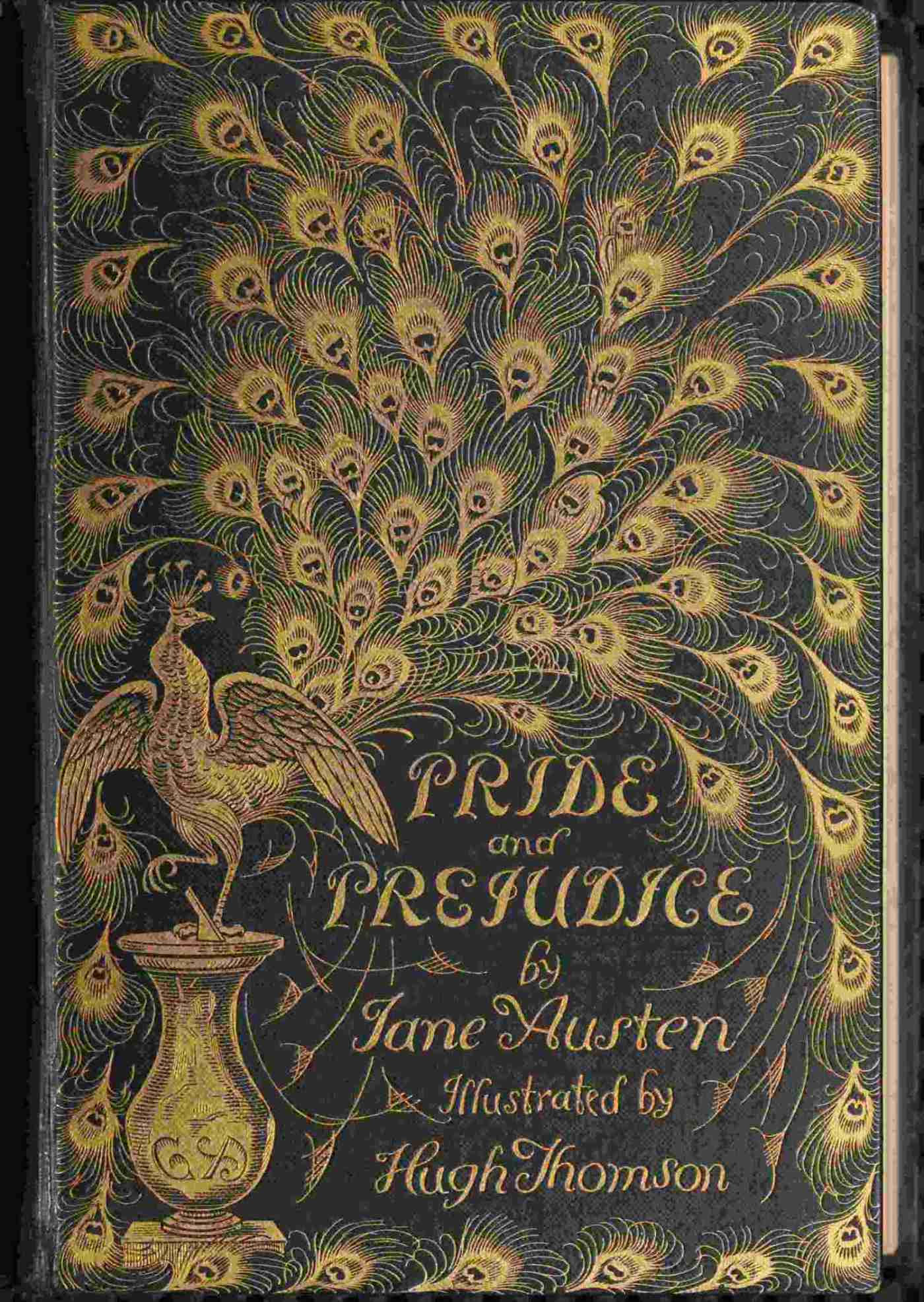
Pride and Prejudice by Jane Austen deserves every bit of praise that it has gotten. Published in 1813, Pride and Pejudice is the 2nd most read book in Britian, beating out even Harry Potter and just behind Lord of the Rings. Because of its success as a novel, it has gotten two movie adaptations and several retellings and knockoff T.V. shows and films based on it.
When I read Pride and Prejudice towards the middle of my freshman year of highschool, the first thing I noticed about it was how Jane Austen incorporated the cultural norms of that era into her writing, making it accurate to the times. An example of this is in the part where Elizabeth walks to Mr. Bingley’s mansion to see her sister. While this might not seem like a big deal to us today, it was considered somewhat scandalous to people in the 1800’s, especially in upper-class society. A woman was usually expected to go with someone like an older brother, father, or other family member when going out to maintain her purity. With this said, unless you’re reading Pride and Pejudice just to see what the hype is about or you’re willing to spend a while Googling facts about 19th century cultural norms, this is where I would suggest reading the annotated version, which has notes that correspond with certain sections of the text to help you understand what you’re reading. Though it will make reading it take longer, it will help you a lot if you’re not used to reading books from that era.
The second thing that makes Pride and Prejudice stand out from other romance novels from the same era and even our contemporary novels is the believability of the characters. For one thing, the characters aren’t given names that are unusual or have some sort of secret meaning that correspond to a character’s personality (such as the name “Bella” meaning “beautiful” in Twilight). Jane Austen gave her characters names that were commonly found in 19th century England and even today. There’s nothing special about the names Elizabeth, Jane, Lydia, Mrs. Bennet, or anything else. They were names used by people in those times, adding a subtle realism to the characters.
Jane Austen also refrained from giving us direct descriptions of characters. Instead of describing a character by their physical attributes, she lets their words and actions paint a picture in our minds of what they might look like. Dialouge is also used to give us some idea of what other characters look like, such as the description of Mr. Darcy having a “quizzical brow”. From our introduction of Mrs. Bennet, the way she speaks gives us the picture of a nervous wreck, whose mood is somewhat unstable most of the time. Our mental picture of Mr. Bennet given how he responds to his wife is of a man who is tired, somewhat fed up with his wife’s antics, but goes along with it because he loves her. Characters will often do things that are unexpected just like people do in real life and learn things about each other as the story progresses. For example, Elizabeth first hates Mr. Darcy partially because she is fed information about him that she finds to be untrue or half-true later on in the story and learns that he’s actually a really good guy.
This leads me to the love story. While the “Haters-to-Lovers” storyline has unfortunately become a common trope for most crappy romance stories, Pride and Prejudice manages to pull it off due in part to the realistic characters and relationships. In most romance novels today (and several back then as well), the male love interest is for the most part a jerk. His entire thing is, “I’m an angsty bad-boy, and they just don’t understand you like I do,” but the minute the female protagonist acts like herself or says no to him, he becomes manipulative and in some cases, borderline violent. Most of the love interests have the emotional maturity of a 13-year-old boy. In Pride and Prejudice, however, Mr. Darcy does act like an arrogant jerk for the first half, but you can see why he would act as he does as his story comes into light. Since he was sheltered for most of his life and never really learned how to interact well with people, it makes sense that he would act more aloof, especially since he comes from a very upper-class family. When he starts trying to act less aloof, it is quickly replaced with uncomfortable awkwardness around Elizabeth, which is understandable since my sources (my dad) tell me that men lose about 50 braincells when they are around a pretty woman. He does his best to win her over, but still gives her the option of backing out if she isn’t interested in him; a direct contrast to many of the boyfriends in most romance novels who become physically and emotionally threatening when the girlfriend wants to leave the relationship to be with family or just to get away from him.
Elizabeth’s part in the relationship is also somewhat like Darcy’s. During the first part of the book, she often speaks sarcastically to Darcy and is quite harsh in her rebuttals toward him. However, as time progresses, she realizes that in several ways, she’s just as prideful and stubborn as Darcy, and comes to terms that she loves him. When she learns about all the things he’s done for her family (like paying for Lydia’s wedding to Mr. Wickham) because of her, that seals the deal. He cares for her, and thus cares for her family, which is something that she values highly. She’s able to put aside her pride as he puts aside his for the greater outcome. This type of character growth in the female protagonist is often something that you don’t see very often in these types of books. Often the protagonist is selfish and mentally unstable, needing a boyfriend to give her a personality since she has no personality, thus making it so she can’t grow. Elizabeth has a personality and doesn’t need Mr. Darcy to give her one, which enables her to grow as a person. Not only does this add to the believability of her as a character, but it helps establish a healthy relationship that more women should be inspired by. In a world where women like to base their relationships off of the sweet-girl-meets-bad-boy dynamic, Pride and Prejudice is one of the few romance novels that show how a loving relationship should be able to grow in a way that’s organic and not forced by one party or the other.
Until next time,
M.J.
Discover more from The Tanuki Corner
Subscribe to get the latest posts sent to your email.
 The Tanuki Corner
Loved this post – heress my feedback –
Thanks for reading , Love The Blog !!
Thanks – TheDogGod – http://www.pomeranianpuppies.uk
LikeLike