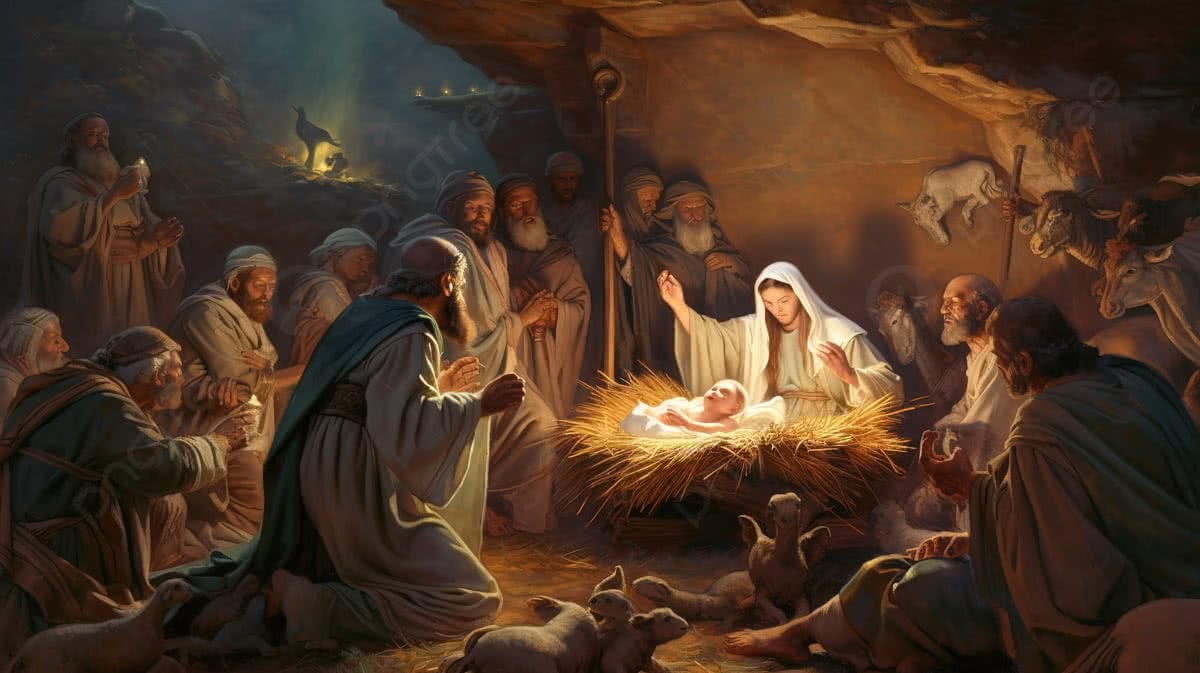
I’m not really sure if this fits as a Debunking Deconstruction post as much as a normal apologetics post, but it works either way since this is something I hear from members of other religions (i.e. Muslims, Wiccans/neo-pagans, Jehovah’s Witnesses) and deconstructers a lot online. A lot of them like to claim that Christmas has more in common with pagan holidays like Yule, Saturnalia, or Dies Natalis Solis Invicti (the Birthday of the Unconquered Sun) since it’s unlikely that Jesus was actually born on December 25 (many scholars think He was born in the spring). So is there anything to this claim? Is Christmas actually a pagan holiday masquerading as Christian? Has it become so secularized that it’s no longer Christian? Is there any Christian heritage to it to begin with?
On the surface, there seems to be some truth to the claim that Christmas is based on the Birthday of the Unconquered Sun (sorry that’s a mouthful). According to Google, this holiday was celebrated on December 25 to commemorate the winter solstice and the gradual lengthening of the day. However, a bit after Constantine began Christianizing Rome, December 25 was officially declared a holiday and Sol Invictus eventually went out of existence. A baby’s birthday beat the sun.
The reason for why this day was chosen isn’t entirely clear, however. One possible explanation is because early Christians believed that Jesus was conceived sometime in March. Others think it was to get pagans involved in the celebration of the Nativity rather than cult activity. However, the evidence seems to point more towards the belief that Jesus was conceived on March 25, thus leading early Christians to celebrate Christmas on December 25th.
The idea that Christmas stems from the sun’s birthday becomes more suspicious when you look at what history says. Christmas was first set on December 25th in 204 AD. The earliest mention of Sol Invictus being celebrated on December 25th dates nearly a century later. It’s more likely, then, that the pagans moved it to the 25th to compete with the Christians.
But what about Saturnalia? Is Christmas based on that?
Once again, the answer is no. First, the dates are off. Saturnalia was celebrated from December 17-23rd or so. Sometimes it would go to the 24th. Secondly, there is no concrete evidence to point to Christians using Saturnalia as a way to take over pagan culture. They picked March 25 as Jesus’ conception date because they believed he was conceived on the same day he was crucified. From there, it’s a matter of adding 9 months. Any evidence linked Christmas to paganism is purely speculative.
Finally, even if evidence were to come out that Christmas was stealing from pagan holidays, Christians have still made it into a fundamentally Christian holiday. Even though many people often lose the meaning of Christmas in the rush of buying presents, getting ready to host guests, and making it a memorable experience for the kids, ultimately, it’s a day where we glorify Christ Jesus, God coming to Earth as a tiny baby. It’s a day where even if one does not believe in Christ or God, they are still reminded of the Gospel through music, decorations, and centuries-old traditions.
Until next time,
M.J.
Discover more from The Tanuki Corner
Subscribe to get the latest posts sent to your email.


Have something to say? Leave a comment! (Verbal abuse and ad hominem will not be tolerated.)