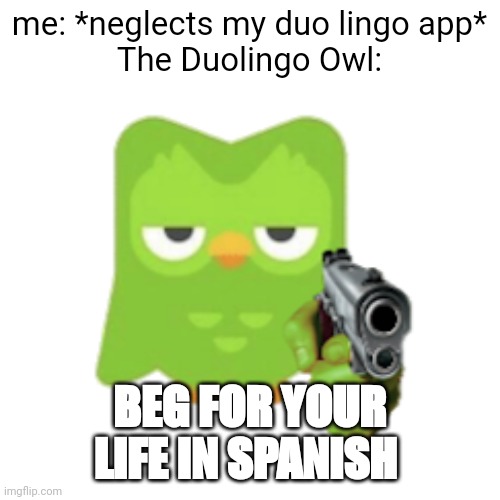
Recently, I decided to try out the language-learning software Duolingo. I had first heard of this program thanks to all the memes about how threatening the reminders to continue learning were and after seeing a video talking about how strange some of the sentences Duolingo has you learn are, I decided to try it out and see if it’s really worth all the fuss.
My first thought upon opening Duolingo was, “Really? You don’t actually teach Sindarin?” I had thought that Duolingo taught Tolkien’s elven language after seeing something about how it was being added to the courses you could take, but unfortunately, that’s not true. Instead, if you’re looking to learn a fantasy language, your only two options are Klingon or High Valyrian, just in case you need to commune with aliens or talk to dragons.
After looking through my options, I decided to learn Welsh, as it’s close enough to Sindarin (Tolkien based Sindarin off of Welsh), is one of the oldest languages in the world, and sounds very pretty. I clicked on it and started a beginner level course. It was then that I found out that Duolingo is actually fun and really addictive.
The thing that separates Duolingo from the other language learning platforms I’ve tried is that it’s structured like a videogame. As you practice, you gain points and XP and if you get something wrong, you lose a heart. Lose all five hearts and… I’m not actually sure what will happen. According to Google, apparently, you’ll have to wait for them to refill, either by taking a break, watching ads, or buying them with gems (which you earn when you complete a lesson). Or maybe Duo the Owl will send a ballistic missile to your house. I don’t know.
Speaking of Duo the Owl, this cute little psychopath is the possibly the best motivation I’ve ever seen for learning a language. Maybe it’s because I’m barely a week into my Welsh course, so the novelty hasn’t worn off yet, but you’ll receive a notification from Duolingo every day to do a lesson, which can be as short as five minutes, which combined with its videogame aesthetic, is pretty good motivation. However, today (the day I’m writing this post), I got my first threatening message from Duo, which, if you don’t know, is what he’s known for. Here’s what that looked like:

Yeah. That’s not creepy at all. If I suddenly go missing, you’ll know why.
So, though I overall like Duolingo, I do have some issues with it. My first issue is the fact that if you miss a day, it will erase your “streak,” which is your dedication to learning. In order to prevent this, you then have to buy “Streak Freeze,” which only works for one day. That means that if you’re going camping, hiking, or are in an area with no cell service and want to keep your streak going, your screwed unless you have a ton of gems.
The second issue is that it doesn’t teach grammar well. I know, no one likes grammar, but when you’re learning a new language, grammar is an important thing to know, especially in languages where everything is gendered (like in Spanish) or specific forms are used for specific groups. This is something that language learning apps such as Rocket Language (which I used back in sophomore year) are really good at, but with Duolingo, you’re left to figure it out yourself. Though you’re learning new words and can get a feel for how sentences are constructed, I can see issues arising later if you try to construct a new sentence yourself.
For example, two of the first sentences I learned were “prynhawn da” and “noswaith dda” (“good afternoon” and “good evening”). I had to do a Google search to figure out why the adjective “da” was used for some things and why “dda” was used for other ones, and the reason was that “da” is used for masculine nouns, while “dda” is used for feminine nouns. This is a big difference that, if this was something like Rocket Language, would’ve been promptly explained, examples of masculine/feminine endings would’ve been given, and exceptions to the rule would be shown. But Duolingo doesn’t explain any of this. You’re responsible for figuring it out as you memorize the new words. Maybe it’ll get better, but I’m not holding my breath.
Now, would I recommend Duolingo? If you want to learn how to speak a language if you’re traveling or want to keep your skills up, I recommend it. However, if you want to become fluent or really understand the language, I would maybe pair it with another curriculum/program.
Until next time,
M.J.
Discover more from The Tanuki Corner
Subscribe to get the latest posts sent to your email.


Have something to say? Leave a comment! (Verbal abuse and ad hominem will not be tolerated.)