It’s been a while since I last added something to this series, but we’re back. A few months ago, an anonymous commentor in my most popular comments section wrote a string of comments, with the gist of them being that Israel is the reason why Hamas exists. They wrote:
You do realise isreal is the reason why hamas exists..? Like why would there be resistance if there was nothing to resist?
In response, I wrote:
May I point out that in 2005, after the Palestinians threw a huge fit about Israel being in the Gaza strip, Israel backed out of the Gaza Strip to appease them? Israelis living in the Gaza Strip at the time were then forced out of there by the IDF to be relocated in Israel, which unfortunately opened Gaza up to become a terrorist hellhole. Hamas exists not as a resistance to the Jewish government and “colonization”, but as a resistance against anything Jewish in accordance with the Koran. Their goal (with is repeatedly stated in their charter, which I’ve gone through in another post), is literally to eradicate the Jewish race to bring Judgement Day. It’s not a social justice thing.
This anonymous commentor then came at me with this response:
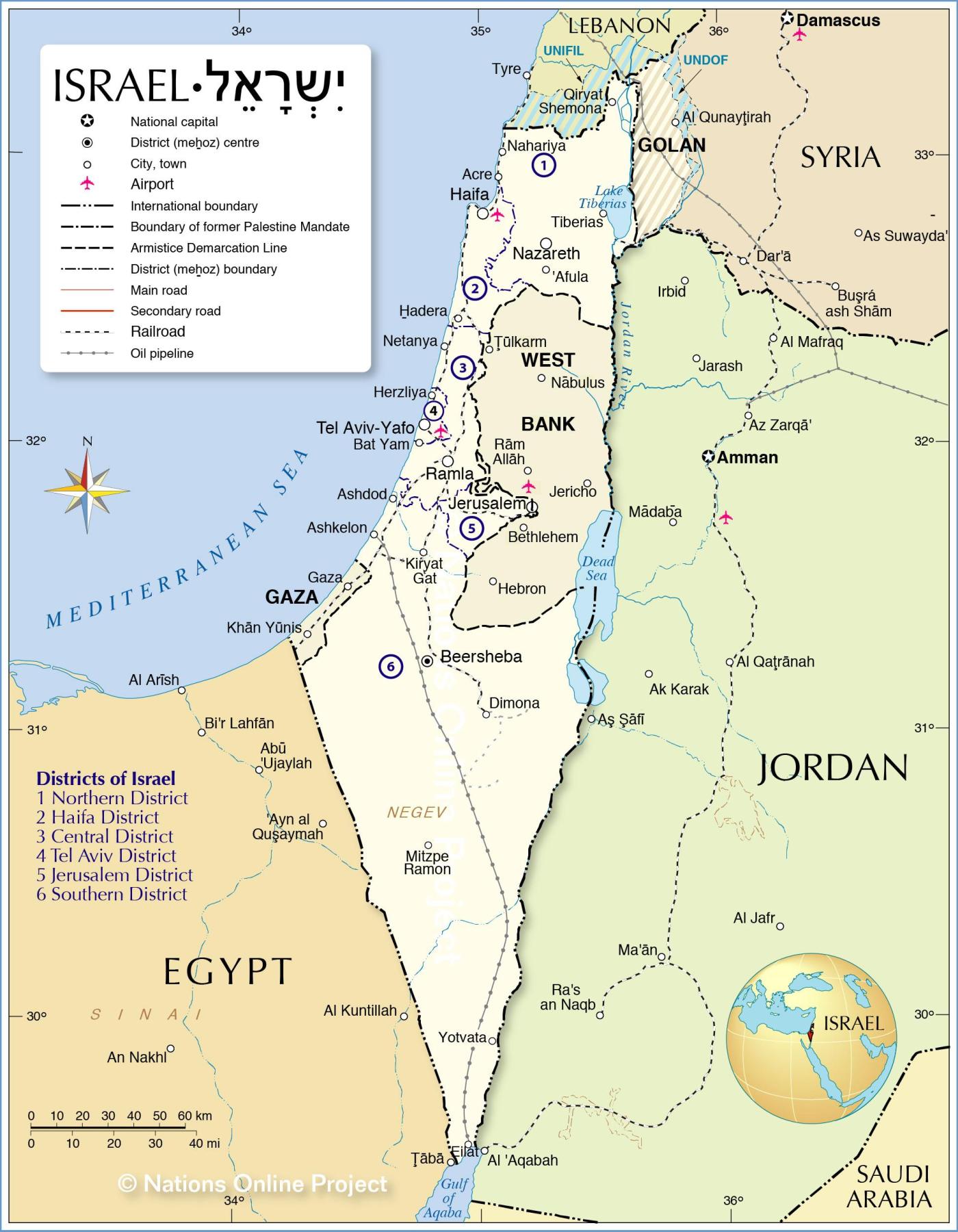
Even before the latest war between Israel and Hamas, Gaza had one of the highest unemployment rates in the world. Many people were living below the poverty line and depending on food aid to survive. Gaza’s boundaries were drawn up as a result of the 1948 Middle East war, when it was occupied by Egypt. Egypt was driven out of Gaza in the 1967 war and the Strip was occupied by Israel, which built settlements and placed Gaza’s Palestinian population under military rule. In 2005, Israel unilaterally withdrew its troops and settlers from Gaza, though it retained control of its shared border, airspace and shoreline, giving it effective control of the movement of people and goods. The UN still regards Gaza as Israeli-occupied territory because of the level of control Israel has. Hamas won Palestinian elections in 2006, and ejected its rivals from the territory after intense fighting the following year. Israel and Egypt imposed a blockade in response, with Israel controlling most of what was allowed into the territory. In the years that followed, Hamas and Israel fought several major conflicts – including those in 2008-09, 2012 and 2014. A major conflict between the two sides in May 2021 ended in a ceasefire after 11 days. Every round of fighting has seen people killed on both sides, the vast majority of them Palestinians in Gaza. Days before Israel marked a year since the 7 October attacks, UN humanitarian agencies signed a declaration demanding an end to “appalling human suffering and humanitarian catastrophe in Gaza”.
Anonymous later tried smugly goading me into responding to their comment, but I had other plans in mind. Why not post a response to their comment on May 14th? After all, it was on May 14, 1948 that the British Mandate over Israel expired and Israel could finally declare itself a country. Thus, here’s a (relatively) condensed history of Israel and its impact on the area from Biblical times to today.
As many people will agree, Israel began 4000 years ago with God’s promise to Abraham to make him the father of many nations (Genesis 17: 5-6). God fulfilled his promise and Abraham had two sons. The first son was Ishmael who came from Abraham’s servant, Hagar, and he would go on to be the father of the Arab nations. The second was Issac, who came from Sarah – Abraham’s wife – and he would become the father of the Jews. The other kids Abraham would later have would become other nations.
Now, Issac was the most important one of the bunch though he wasn’t the oldest because he was the one that God has originally promised to Abraham. We see this especially in the fact that before Issac was born, Sarah was barren, so God allowing her to have Issac was a big deal. Later, in Genesis 25, Abraham would give all his possessions to Issac and further confirm God’s previous promises to him in Genesis 26: 3-4, when God tells Issac, “Sojourn in this land, and I will be with you and will bless you, for to you and to your offspring I will give all these lands, and I will establish the oath that I swore to Abraham your father. I will multiply your offspring as the stars of heaven and will give to your offspring all these lands. And in your offspring all the nations of the earth shall be blessed.”
Now fast forward a bit. Issac has two sons, Jacob and Esau. Esau is a bit of a moron and sells his birthright as the oldest twin to Jacob for a bowl of soup. Jacob later, with the help of his mother, tricks Issac into giving him the blessing meant for Esau, Esau gets angry when he finds out, and Jacob runs away. However, God blesses Jacob and changes his name to Israel (Genesis 32:22-32). A bit later, Jacob gets married and has twelve sons, who become the twelve tribes of Israel.
Fast forward some more. Jacob’s son, Joseph, is sold as a slave to the Egyptians, but quickly rises through the ranks, becoming incredibly powerful. He saves Egypt from a 7-year-long famine and brings his family and their entire household to Egypt to also survive the famine. The Israelites live there for a long time, quickly multiplying, and later become slaves. God sends Moses to bring them out of Egypt, the 10 Plagues and the Exodus happen, and off the Israelites go to the Promised Land, a.k.a. Cannan (but with a 40-year delay thanks to the Golden Calf incident and some other stuff).
After a while of wondering around in the desert, the Israelites finally reach the Promised Land, take down Jericho, and begin their occupation of Cannan, splitting the land up between the different tribes of Israel. They have some problems with the remaining Cananites and it isn’t until the reign of David that the land is fully conquered.
Now, we need to talk about David for a sec, because this is where we can start seeing a Biblical struggle between Israel and the strip of land we now call Gaza. If you happen to have a Bible on you with some maps showing where Philistia (the place where the Philistines came from) was, you’ll see that it looks almost exactly like the Gaza Strip today in terms of where the borders are. While this might not seem important, it just goes to show that that area of land has been being fought over for thousands of years, and as we know from the story of David, Philistia was conquered by King Dave. This was not only a very good thing for Israel because it expanded their territory and would help ensure their safety, but the Philistines, similar to the Cananites, were terrible people, practicing child sacrifice like their neighboring nations.
From there, while Israel was pretty stable for a time, they soon began sinning against God and practicing some of the same customs as their pagan neighbors. Thus, God allowed them to be taken over by many different empires, such as the Assyrians and Babylonians, which takes up a good chunk of the Old Testament and kicks off the Jewish diaspora which continues into today.
Time to skip to the interim between the Old Testament and the New Testament. Empires rise and fall, and Israel is just kind-of left floating around between empires. The Greek Empire falls, the Maccabees revolted against the Seleucids, gaining independence for 80 years, then Romans took over when, in 63 B.C., a civil war broke out in Israel between the Pharisees and Sadducees, allowing a guy named Pompey to take over Jerusalem. This significantly changed the socio-political climate in Israel. Many people didn’t like the Roman occupation (rightfully so) and led a lot of revolts. However, it isn’t until 135 A.D. after the Bar Kokhba Rebellion that the Romans rename the region “Syria Palaestina” in an attempt to quell anymore Jewish revolts by minimizing Jewish identification with the land (this also means that Jesus would never have identified himself as Palestinian and would’ve looked at you like you were on crack if you called the area “Palestine” when he was alive.) Another reason why they called the land “Palestine” was because it referenced the Philistines, who, as we’ve seen, were the enemies of Israel, making it even more of an insult to the Jewish people.
Why am I starting all the way back in ancient times? The reason is because to understand why Israel is so important and why it’s so important to the Jews, we must understand how oppressed they’ve been for thousands of years. For as much as the pro-Palestine group likes to whine about how oppressed they are (I swear, it’s Gaza’s regional pastime), they have nothing on Israel’s history of constant and ongoing oppression by neighboring countries. But let’s keep going with this history lesson.
Fast forward some more into Medieval times. Many Jews at this point had made their way to Europe, living in places like England, Germany, France, Spain, etc. However, they did not have a home there and faced persecution by the peasants, partially because they would not convert to Catholicism, partially because the church thought that all Jews were responsible for killing Jesus (not realizing it was the whole of humanity, past, present, and future, that did so), but mostly because the Jews were money lenders and the people didn’t want to pay interest. From this, the Jews were often feared by the people, slandered with blood libel, were used as scapegoats, and kicked out of countries such as England by King Edward I (a.k.a Edward Longshanks).
[Author’s Note: Interestingly, though the many people blame the Roman Catholic Church for the rampant Jew-hatred of the Middle Ages, it was actually the church that did the most to protect them, allowing Jews into churches when angry peasant mobs were trying to kill them and even helping keep lending records to keep them all from being destroyed in the Jewries by said angry mobs.]
Meanwhile, in the Middle East (which, thanks to the Romans was now known as Palestine), the Byzantine Empire was in full swing and facing a threat from a certain group of people from a certain religion that we’re very familiar with here on the Tanuki Corner. Can you guess who it was?
If you guessed the Arabs, who were Muslim, then you’re correct.
The Arabs had been attacking the Christian Byzantine Empire since the 7th Century to the 11th Century in an attempt to spread Islam (in fact, it was under the ever-peaceful leadership of the warlord, Muhammad that the Muslim Arabs would start attacking Byzantium in the late 620s). Later, they would go on to be partially successful, conquering large swaths of Byzantium, and unsuccessfully attacking the capital of Constantinople. Unfortunately, one of the areas that the Arabs were successful in taking was Jerusalem, which fell to them in April of 637 A.D. after a long siege.
I won’t go into all the details regarding the Arab-Byzantine wars, but (spoiler alert), Byzantium won, however, they didn’t recover Jerusalem or the rest of what was considered Palestine (which, BTW, the Arabs didn’t start calling the land Palestine until recently). The Jews and Christians were allowed to live in Jerusalem, but they had to pay jizyah (a tax for non-Muslims). While not great for either party, at least the Jews could still live there, and the Christians could still make their pilgrimages and there was peace for a while.
That all changed, however, when the Seljuk Turks (who were Sunni) decided that the Byzantine Empire looked pretty nice and decided they wanted some of it. So, they started conquering different places, and within two decades of arriving in Western Asia, they had taken over Iran, Iraq, and the Near East, and started fighting the Shi’ite Arabs. Concerned by this, Byzantine Emperor Romanos IV Diogenes attempted to confront the Seljuks to stop them from causing more problems but was defeated at Manzikert. Confrontations between Christians and Seljuks continued and reached a head in 1071, when the Turkish warlord Atsiz took over Jerusalem and kicked out the Christian pilgrims. This was not good and Byzantium was obviously perturbed by this, so in 1095, Emperor Alexios I Komnenos asked Pope Urban II for military aid in fighting off the Seljuks, to which Pope Urban II probably said, “Say no more, buddy,” and the First Crusade began to take back Jerusalem (and Muslims like to blame us Christians for the Crusades).
Unfortunately, no one really won at the end of the Crusades. The Muslims retained control of Jerusalem and the Holy Land; Jew hatred had increased everywhere (though the Church eventually condemned the rampant antisemitism after a massive attack on the Rhineland Jewry in Germany that almost wiped them out entirely); and the Christians didn’t take back the Holy Land and now we have a blight on church history. Great.
So, continuing throughout the centuries, Jews in Europe were persecuted for being Jewish, moved from place to place, etc. Europe was basically soaked in Jewish blood. Moving on several hundred years, and though the church had toned down the antisemitism, there was a new threat in town: eugenics.
I’ve talked about eugenics quite a bit on this blog, but it started becoming really popular in the late 1800s into the 1900s, being endorsed by many prominent atheists. It was supposed to be the great cure-all. Sure, millions of people might have to die for arbitrary reasons, but who cares when you have a population of perfect people? Or so many scientists, racists, and politicians thought.
This then leads us to WWII, where we saw exactly what happens when you introduce economic turmoil, a charismatic, racist madman with a funny mustache, and eugenics into society: you get the Holocaust. Leading up to this event, Germany was facing hyperinflation to try to pay its dues from WWI, which made their money worthless. People were resentful because they could no longer afford anything and looked for someone to blame, and unfortunately, Germany had a large Jewish population, with many of these Jews running financial institutions, banks, and large businesses. It didn’t help that much of the Germany public, and Hitler himself had bought into the belief that Germany had lost WWI because of the Jews doing something in the background to make them lose, and it became very easy to get other Germans to buy into this belief.
Furthermore, Hitler and many other Germans of the time believed that the Aryan race was superior and wished to create a race of “Übermensch” or supermen. Thus, in order to do that, they had to get rid of anyone not of the Aryan race, the disabled, LGB people, and anyone else who Hitler just didn’t like. This led to 6 million Jews being killed in concentration camps from 1933-1945. Sadly, though the Allies knew about the deathcamps and were prepared to hold Hitler and the Nazis to account, they decided that winning the war was more important than saving the Jews and also thought that destroying the death camps would only promote worse treatment of the Jews. The church also did not do much because Hitler was intent to Nazify everything and had been widely successful in Germany, with very few Christians standing up against him.
After the war in Europe ended, the remaining Jewish population began pressuring Britian (which ran the region known as Palestine) to have a state of their own. Never again could they allow anything like the Holocaust to happen. Proposals for a Jewish state had been going on for a long time, with an early pre-cursor of modern Zionism, Mordecai Manuel Noah, attempting to create an independent Jewish city-state in 1820 on Grand Island, New York, though it never came to fruition. Other attempts were made over the years with varying levels of success. In 1917, Zionists got the British to pass the Balfour Declaration, which would allow Britian to establish a Jewish homeland in Palestine. The League of Nations endorsed it, and a big step was taken in the creation of the state of Israel.
Of course, the Balfour Declaration greatly angered the Arabs, who had been living there for a few centuries now. What had they been doing since then, especially after Palestine came under British occupation? Not much, it seems. They were pretty much all just doing nothing and all the advancements in the area were coming from the British (funny how Islam never makes society better).
But of course, letting go of Jerusalem would just be too terrible to imagine, because according to Islam, that was where Muhammad supposedly flew his flying, talking donkey (voiced by Eddie Murphey) and claimed to visit the Western Wall (even though the description of the Wall was incorrect and everyone knew it). Thus, the Muslim Arabs in the region threw a fit and the British had to take Jerusalem from them and put it under military occupation from 1917-1920. In 1918, Muslim-Christian organizations form in large towns and in 1919, 30 delegates are sent to gather in Jerusalem where they become the Palestinian Congress, where they agree to meet annually to resolve conflicts between the Arabs, Zionists, and British. That January, President Chaim Weizmann (the first president of Israel) pledges that the Jewish population will work with the Arabs in the economic development of Palestine. In return, the Arab leader, Faisal of Syria, would recognize the Balfour Declaration. Faisal agreed to Jewish immigration, as long as the rights of Palestinian Arabs were upheld and protected – a win-win sort of agreement.
However, this agreement would be rendered void in 1920 when the French (who always screw something up) occupied Syria, breaking the agreement since part of it was also that the greater region of Syria would be recognized.
Despite this, many Jews still immigrated to Palestine and pushed for the establishment of a Zionist state, with Sir Herbert Samuel leading the charge. That year (1920), a Jewish national assembly is formed with 300 delegates to make decisions on behalf of the Jewish community and is recognized a legitimate representative for the Jews in the region. The Federation of Jewish Labor is also formed to promote Jewish trade unionism, exerting a lot of influence over the ideology and politics of the Jewish community at the time and the future state of Israel. The Arabs (who make up 85% of the population at this point) now face boycotts and start rioting, which forces the Jewish community to form the Haganah, which was their defense force.
Over the next several years, a bunch of other things happen, the British try to keep the peace, etc. As much as I would like to talk about them, we still have the rest of the 20th century to get through and I’ve been writing this post for about five or six hours now, so I’m going to fast forward to the formation of Israel as a state.
On November 29, 1947, the UN voted to partition Palestine into a Jewish and an Arab state which once again, angered the Arabs. Then, on May 14, 1948, after decades of struggling, negotiating, fighting, etc. Israel was finally an independent state run by David Ben-Gurion. However, the struggle wasn’t yet over. In retaliation, Jordan, Lebanon, Iraq, Syria, and Egypt invaded Israel within days of them declaring independence, starting the 1948 Arab-Israeli War in a desperate attempt to keep Israel from being a state. Yemen, Morocco, Sudan, and Saudi Arabia joined the war and within a year, a ceasefire was declared. Jordan annexed the West Bank and Egypt got the Gaza Strip.
Israel continued to grow and become a prosperous country, despite frequent attacks in the 1950s from Arab fedayeen, who would almost always target civilians in their terrorist attacks. In 1956, Egypt took over the Suez Canal and, rightfully tired of Egypt blocking their shipping lanes, the increasing terrorist attacks from the fedayeen, and the threats from other Arab nations, Israel put her foot down and attacked Egypt, forming a secret alliance with the UK and France, overrunning the Sinai Peninsula. Though they eventually had to withdraw due to pressure by the UN, it did significantly reduce Israeli border infiltration.
In 1966, Israeli-Arab relations had deteriorated significantly, causing battles to break out on the border between Israeli and Arab forces. In 1967, the Six-Day War broke out in which Egypt attacked Israel’s southern border, and Jordan, Syria, and Iraq joined the attack. Though it seemed like Israel might fall, they actually kicked the Arabs butts, retaking the West Bank, the Gaza Strip, the Sinai Peninsula, and the Golan Heights. Unfortunately, peace had not been achieved as from 1967-1970, the War of Attrition was waged between Israel and Egypt in the Sinai Peninsula and terror attacks from Palestinian groups such as the PLO targeted Jewish and Israeli targets worldwide, including a massacre of Israeli athletes during the 1972 Summer Olympics in Munich, to which Israel responded by attacking the PLO.
A year later, on October 6, 1973, the Yom Kippur War started and in 1976, an airliner going from Israel to France was highjacked by Palestinian terrorists (they don’t know when to stop) and took 105 Israelis hostage. 102 of the hostages were eventually freed by Israeli commandos.
In 1978, Israel signed the Camp David Accords and in 1979, they signed the Egypt-Israel peace treaty. Israel withdrew from the Sinai Peninsula and agreed to enter negotiations to over the autonomy of Palestinians in the West Bank and Gaza. However, in 1978, tensions ran high as since the PLO’s attack that led to the Coastal Road Massacre, in which 38 Israelis, including 13 children, were killed, which caused Israel to launch an attack on the PLO’s base in southern Lebanon and have incentive to settle in the occupied West Bank. In the 1980s, more PLO attacks on Israel led to more attacks in Southern Lebanon.
Throughout the ’80s, attacks from the PLO on Israel continued, and the First Intifada started, lasting for six years and ending with over a thousand people killed. In 1991, the Gulf War started, and the PLO happily supported Saddam Hussein and Iraq. In 1992, Yitzhak Rabin became Israel’s prime minister and a year later, the Oslo Accords were signed, which turned over control of the West Bank and Gaza Strip to the Palestinian National Authority, allowing them to govern those lands, while the PLO recognized Israel’s right to exist. In 1994, Israel signed a peace treaty with Jordan that also went a ways in normalizing relations with Israel.
Unfortunately, though, these treaties were not long recognized. Because of Israel’s decision to continue running checkpoints and the fact that Israelis were still settling in the area, the peace the Accords brought was damaged and further damage was inflicted when some Palestinians decided to start suicide bombing again. Rabin was assassinated in 1995 by an Israeli who was angry about the Accords and Benjamin Netanyahu became the new prime minister.
Because of the massive security threat the Palestinians in Gaza posed, Netanyahu signed the Wye River Memorandum, in which both sides would work together to prevent terrorism, crime, and hostilities directed towards each other. In return, the Palestinian side would outlaw terrorist organizations, prohibit illegal weapons, and prevent incitement. It would be a bilateral agreement, with a trilateral committee consisting of the U.S., Israel, and Palestine. The Palestinians would be allowed to have a police force, the Palestinian National Charter would be nullified since it didn’t line up with letters exchanged between the PLO and Israeli Government in 1993, there would be legal assistance and criminal matters, and human rights and rule of law would be accepted to protect the public.
All of this was very good, but when Ehud Barak (the tenth Israeli Prime Minister) offered to establish a Palestinian state in which the Arabs would get 90% of the West Bank plus all of Gaza and they would have a shared capital of Jerusalem at the 2000 Camp David Summit, Palestinian leader Yasser Arafat basically said no, and the talks failed. To make things worse, the Second Intifada broke out, with Palestinian suicide bombings happening constantly. Israel ended the Intifada when, in 2005, they unilaterally withdrew from the Gaza strip and began construction of the West Bank barrier. If you’re still wondering why Israel controlled the border, airspace, and shoreline, effectively controlling the movement of people and goods, this is why. If they didn’t, they would be making the creation of even more problems even easier than they already were.
From there, we know what else happened. In 2006, the Palestinians elected Hamas to rule Gaza and since then, Hamas has been ruthlessly attacking Israel, calling for Israel to retaliate to protect themselves. It is not Israel’s fault that Gaza and Arab “Palestine” is a hellhole where many people live below the poverty line. When you allow yourself to be run by terrorists who only care about power and appeasing their tyrant god, Allah, so they can spend eternity deflowering 100 virgins every day for eternity (that’s literally what Islamic paradise looks like), your country will reflect that evil.
If you’ve made it this far, I thank you. I know this is probably the longest blog post I’ve ever written. But I hope that after you have read this that you better understand the history and plight of the Jewish people and why they deserve to live in peace in their country in the Promised Land.
Until next time,
M.J.
Discover more from The Tanuki Corner
Subscribe to get the latest posts sent to your email.


Have something to say? Leave a comment! (Verbal abuse and ad hominem will not be tolerated.)