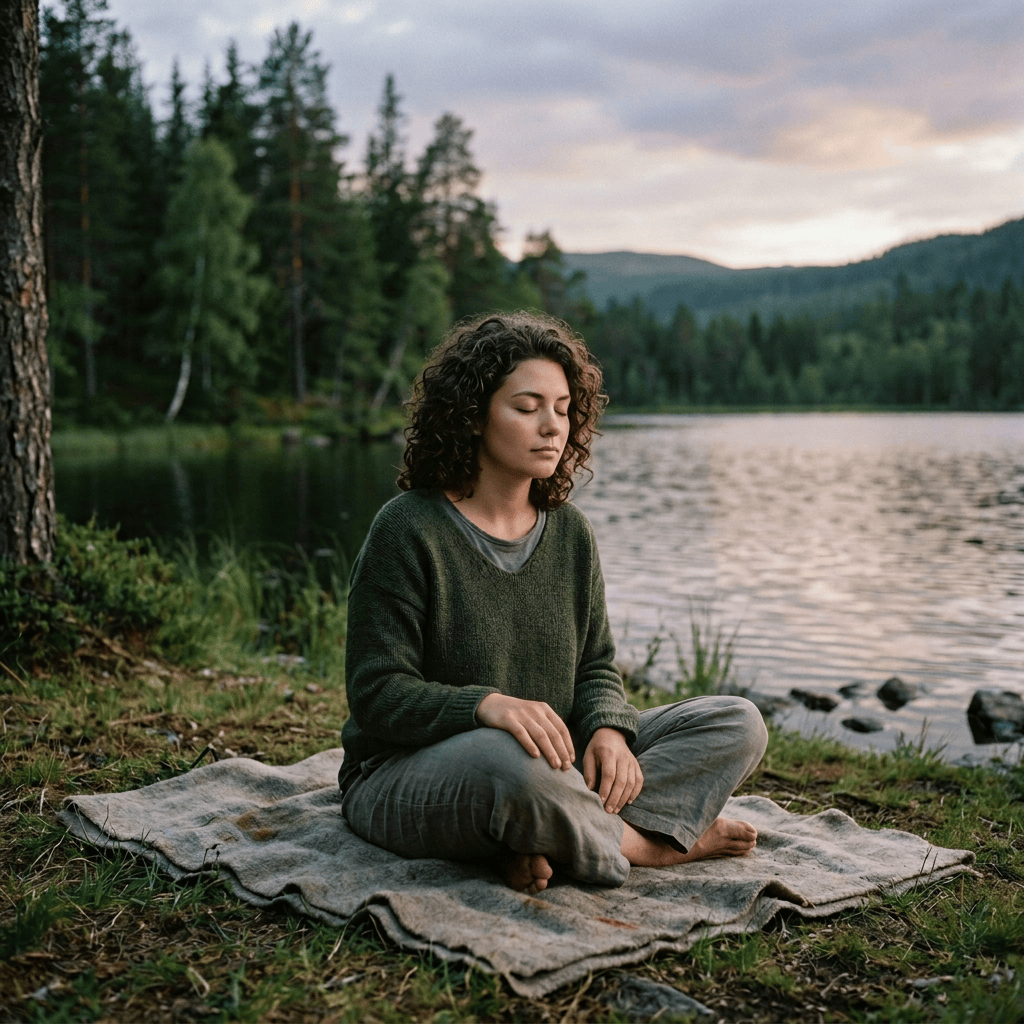
If you go to church, you’ve unfortunately probably heard this said before.
You’re sitting there in the church, listening to the sermon, coffee and a Bible in hand. The pastor is doing a sermon about how we need to trust God or something when he starts talking about Psalm 46:10, where it says: “Be still and know that I am God.” He then springboards off of that to start talking about how we need to start incorporating silence and solitude in our lives, having a few minutes a day with no distractions, no phone, nothing – not even prayer. We just need to dedicate time to sit and wait on God to speak to us and listen to His still small voice.
If you’re like me, if you heard that in church, you would probably confront the pastor, then leave, or skip that step entirely and just walk out. But why exactly is this such a big deal?
Contemplative prayer has become extremely popular in the church over the past couple of years. Many Christians see it as just another way to worship God and to hear God’s voice, by essentially meditating, waiting for God to speak to them by calming themselves and getting rid of distractions. However, this is where we run into the first problem….
Contemplative prayer, by itself, is not a biblical form of prayer, nor is it a biblical form of meditation, as much as passages are often misapplied to make it appear as a biblical practice. In the Bible, prayer is not done by silencing yourself and waiting for God to speak. Prayer is communication with God, which requires – surprise, surprise – communicating with God. Contemplative prayer removes such communication and many writers who promote it even look down upon verbal prayer, even saying that silence is superior.
Similarly, meditation in the Bible is not like meditation in – for example – yoga, where you try to still yourself and your mind. Meditation in the Bible is often speaking of meditating on God’s Word. That means reading your Bible, studying it, thinking about it, praying to God, and worshipping Him. All of that is often missing in contemplative prayer, as it wants you to still your mind and go completely silent.
As though that wasn’t bad enough, we have the far more sinister problem with contemplative prayer: where it even comes from.
According to ex-astrologer Marcia Montenegro, contemplative prayer or centering prayer “[…] has been taught by Roman Catholic monks Thomas Merton, Thomas Keating, and Basil Pennington, as well as by Quaker Richard Foster, and is being advocated by many others. There is no one authority on this method, nor is there necessarily a consistent teaching on it, though most of the founding teachers quote medieval mystics, Hindu, and Buddhist spiritual teachers.”
Yikes. But it gets worse. She continues:
According to http://www.contemplativeoutreach.org,
“Centering Prayer [a.k.a. Contemplative Prayer] is drawn from ancient prayer practices of the Christian contemplative heritage, notably the Fathers and Mothers of the Desert, Lectio Divina, (praying the scriptures), The Cloud of Unknowing, St. John of the Cross and St. Teresa of Avila. It was distilled into a simple method of prayer in the 1970’s by three Trappist monks, Fr. William Meninger, Fr. Basil Pennington and Abbot Thomas Keating at the Trappist Abbey, St. Joseph’s Abbey in Spencer, Massachusetts.”
It should be added,
“During the twenty years (1961-1981) when Keating was abbot, St. Joseph’s held dialogues with Buddhist and Hindu representatives, and a Zen master gave a week-long retreat to the monks. A former Trappist monk who had become a Transcendental Meditation teacher also gave a session to the monks.”
The influence of Buddhism and Hinduism on Contemplative Prayer (hereafter referred to as CP) is apparent. Words such as “detachment,” “transformation,” “emptiness,” “enlightenment” and “awakening” swim in and out of the waters of these books. The use of such terms certainly mandates a closer inspection of what is being taught, despite the fact that contemplative prayer is presented as Christian practice.
Themes that one finds echoed in the Contemplative Prayer movement include the notions that true prayer is: silent, beyond words, beyond thought, does away with the “false self,” triggers transformation of consciousness, and is an awakening. Suggested techniques often include breathing exercises, visualization, repetition of a word or phrase, and detachment from thinking.
So not only does this practice go back to a bunch of medieval mystics, but it has also been heavily influenced by Buddhism and Hinduism. Why the heck is this being taught in the church?
But of course, there’s the ever-present rebuttal of, “So what? Sure, it has some questionable roots, but why can’t we redeem it for God? The context is bad, but change the context, and in of itself, it’s fine.”
Ha, ha, ha, no!
Not only is this practice in of itself unbiblical as I explained previously, but we have the fact that it can very easily lead down a dark path. The entire practice of contemplative prayer is to open yourself up to hearing from God, but what happens when that backfires? In the post quoted earlier from Marcia Montenegro, she writes that one teacher of contemplative prayer, Quaker Richard Foster, “even warns about silent contemplative prayer, saying that it is for more mature believers, that “we are entering deeply into the spiritual realm” where we may encounter “spiritual beings” who are not on God’s side. He suggests a prayer of protection in which one surrounds himself with “the light of Christ,” saying “all dark and evil spirits must now leave,” and other words to keep evil ones at bay.” She goes on to compare this to her time in the New Age, “when I was taught to invoke a white light of protection before psychic activity or contact with the dead.”
See the problem here? Contemplative prayer isn’t just a way to connect to God. You’re opening yourself up to all sorts of things, most of which likely don’t want you to know who Jesus is. And to teach this practice as a healthy practice in church to a bunch of people who don’t know how to discern is especially dangerous.
On that note: we also must ask ourselves if as Christians we should even be giving the devil that sort of foothold in our lives. Should we be opening ourselves up to that influence? The answer should be no.
Until next time,
M.J.
Discover more from The Tanuki Corner
Subscribe to get the latest posts sent to your email.


Have something to say? Leave a comment! (Verbal abuse and ad hominem will not be tolerated.)