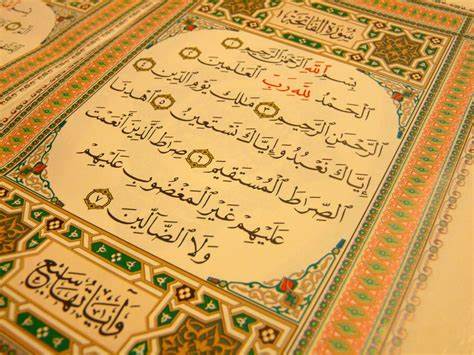
Back with speed running Surah al-Baqarah, we’re speed running verses 203-237.
We start off where we left off on verse 203. Until we get to verse 213, it pretty much the usual stuff, where we’re told that Allah doesn’t like mischief or anyone who makes mischief, and that if he’s provided a bunch of signs to prove his existence. However, once we hit 213, we find that the Quran finally gives us some lore. According to the Quran, mankind was once one people under one religion until they started having disagreements, which led to division. To ramify this and make the truth known, Allah sent a bunch of prophets (starting with Noah) to reveal the truth about where they differed, but they wouldn’t listen and continued to split.
But here’s where it gets interesting since according to the tafsir on this verse, Islam is the ultimate truth that clarifies where things are disputed. The issue with that though, is that if we look at the Quran and the Bible, even things that aren’t disagreed on by Jews and Christians get changed randomly by the Quran, for absolutely no reason. If it was sent to smooth over the theological and doctrinal rifts between the two, it just made things worse.
Moving on from that, verse 214 tells Muslims to expect adversity, 215 tells them to give alms, and 216 tells them that not only is jihad (as in fighting unbelievers) necessary, but obligatory. There is absolutely no room for being a peaceful Muslim. You are required to fight according to the Quran. And to further instill fear in Muslims of what will happen if they don’t fight are verses 217-218, which says that if they turn back and reject the faith, they will never get into Heaven. Essentially all their good deeds will be deleted by Allah, similar to how you lose all your XP if you cancel a course on Duolingo.
But don’t worry, the Quran doesn’t linger long on that warning since verses 219-221 hop back to commanding Muslims to give alms, not to gamble or drink, to help orphans, and not to marry unbelievers.
Then we have verses 222-223, which are ridiculously misogynistic. Verse 222 says that women who are menstruating are unclean and are to be treated as such. Now, I wouldn’t totally have a problem with this if it were just taking from the similar command in the Bible, which was meant for a certain time and place, but the Quran’s version of this is universal. Additionally, is the fact that in both 222-223, the Quran tells men that their wives are like a “tilth” (a piece of fertile ground) that they can take when, where, and however they want, as long as they do some good deed for Allah, first.
Handmaid’s Tale much? In today’s vernacular, that would be like calling your wife an oven for making babies (or something worse).
Verses 224-225 warns Muslims not to make oaths in Allah’s name against doing good, acting rightly, or making peace. Then 226-227 hops into what to do if you’ve taken an oath of abstention. Naturally, this only applies to men, and the Quran only says that if a man takes an oath of abstention, he only needs to abstain for 4 months…unless he’s getting divorced. In that case, he can abstain from his wife for as long as he wants.
Speaking of divorce, according to verses 228-233, divorce is completely permissible and you’re allowed to divorce the same woman up to two times. You’re also allowed to remarry, and, if both parties don’t want the kids, you can give them away to a foster-mother until they finish suckling. After that, who knows what will happen since Muhammad abolished adoption. I assume they’d be going back to one of their parents (probably the father), though that would be an awkward conversation.
Finally, verse 234 jumps to what to do if you die and leave behind a widow. After death, they are to wait four months and ten days before moving on. Then it jumps back into divorce, including divorcing someone before the marriage is consummated in 235-237.
Until next time,
M.J.
Discover more from The Tanuki Corner
Subscribe to get the latest posts sent to your email.
 The Tanuki Corner
Have something to say? Leave a comment! (Verbal abuse and ad hominem will not be tolerated.)