Welp, I need a break from writing reviews about The Pendragon Cycle. It’s been five episodes and things are hardly getting better, so to keep writing reviews of each episode will pretty much be me repeating the well-established fact that it suffers from terrible pacing and incompetent writing. I will return to it either when the series ends or when Brett Cooper makes an appearance as Ganieda for more than five seconds. Whichever comes first.
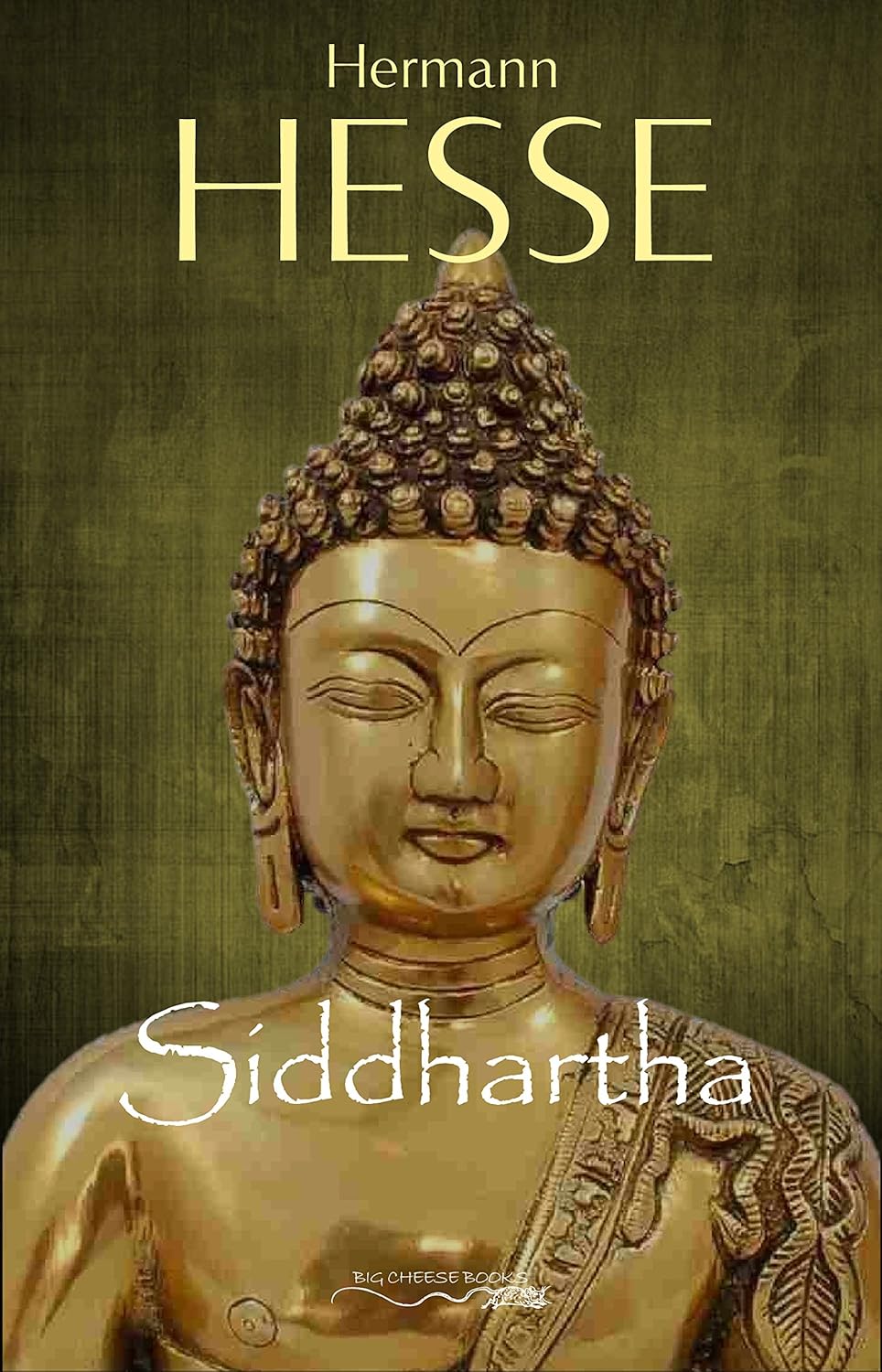
Until then, I figured that I would review a thin little book called Siddhartha, written in 1922 by a German dude named Hermann Hesse. It follows the story of a brahman’s son named Siddhartha who’s on a quest for spiritual enlightenment and self-discovery after realizing that his life is essentially meaningless. On the way, he joins a group of ascetics called samanas, meets the Buddha, loses his best buddy to Buddhism, wanders around aimlessly for a while, decides to essentially become some lady’s boy toy and becomes super rich, then realizes that he’s become a terrible person, so goes in the opposite direction into poverty. From there, he finds out that he’s accidentally fathered a son, adopts his son after his mother dies, the kid hates him, and after his son runs away, he realizes that life is just like one big river of reincarnation where everyone is connected.
In other words: monism (I think).
Overall, this book is an exploration into why this sort of world view doesn’t work. Siddhartha seems to take the route that Buddhism takes of: “You figure it out.” Siddhartha’s “salvation” isn’t dependent on someone else, but rather his own personal experiences to come to enlightenment. However, getting to that point is a chaotic mess with hardly any sort of good payoff.
As I said earlier, Siddhartha is a Brahman’s son. He’s grown up performing all the ritual duties to the Hindu gods, has a well-off family, is loved and revered by everybody, and could get whatever he wants. But it’s not enough for him. The rituals, while they seem to work for his family, don’t feel right to him, so he decides to leave everything behind. He goes in the complete other direction, joining the ascetics with his friend Govinda.
However, he also feels like their teaching is empty and leaves after a while, eventually running into Buddha. He also finds Buddha’s teaching to be weird, but allows Govinda to join Buddha’s following, while he goes off on his journey to enlightenment.
After that, he eventually swings back to his original life in the sense that he’s rich, entertained, has a sugar momma, and can have anything he wants. The only thing that’s missing is his true sense of meaning as it gets eroded by hedonism. After realizing that he’s grown old and unlikeable, he decides to leave and swings back into extreme poverty, where he comes to enlightenment by watching a river.
This type of “figure out your own crap” mentality when it comes to reaching salvation doesn’t work for three reasons. First, it doesn’t work because it’s extremely subjective. What if your path to reaching salvation requires human sacrifice? After all, you’re just figuring it out for yourself. There’s no reason why it’s not any better than some dude finding salvation by observing a river.
Second, it doesn’t work because what Siddhartha realizes at the river is that all life is connected. It doesn’t matter if you’re a literal god, a murderer, or of the lowest caste. All life is one. This is an illogical view because if all life is one and everything is connected, then there can’t be any sort of morality. Once again, everything is subjective, and because all is one, there can be no good or bad thing because it’s all one in the same.
Third, this view of salvation is incredibly self-centered. Throughout the book, I found Siddhartha to be a completely unlikeable character because on his search for enlightenment, he leaves everybody behind. He leaves his parents, sort-of ditches his best friend, and leaves his girlfriend because he’s decided that it’s not enough! Then he fails his son, and it’s implied that he runs off and becomes a criminal.
And all of this is for the sake of enlightenment.
Overall, Siddhartha is very well-written, but if you’re looking for a story that’s not focused around a guy on self-centered quest, maybe find a different book.
Until next time,
M.J.
Discover more from The Tanuki Corner
Subscribe to get the latest posts sent to your email.
 The Tanuki Corner
Have something to say? Leave a comment! (Verbal abuse and ad hominem will not be tolerated.)