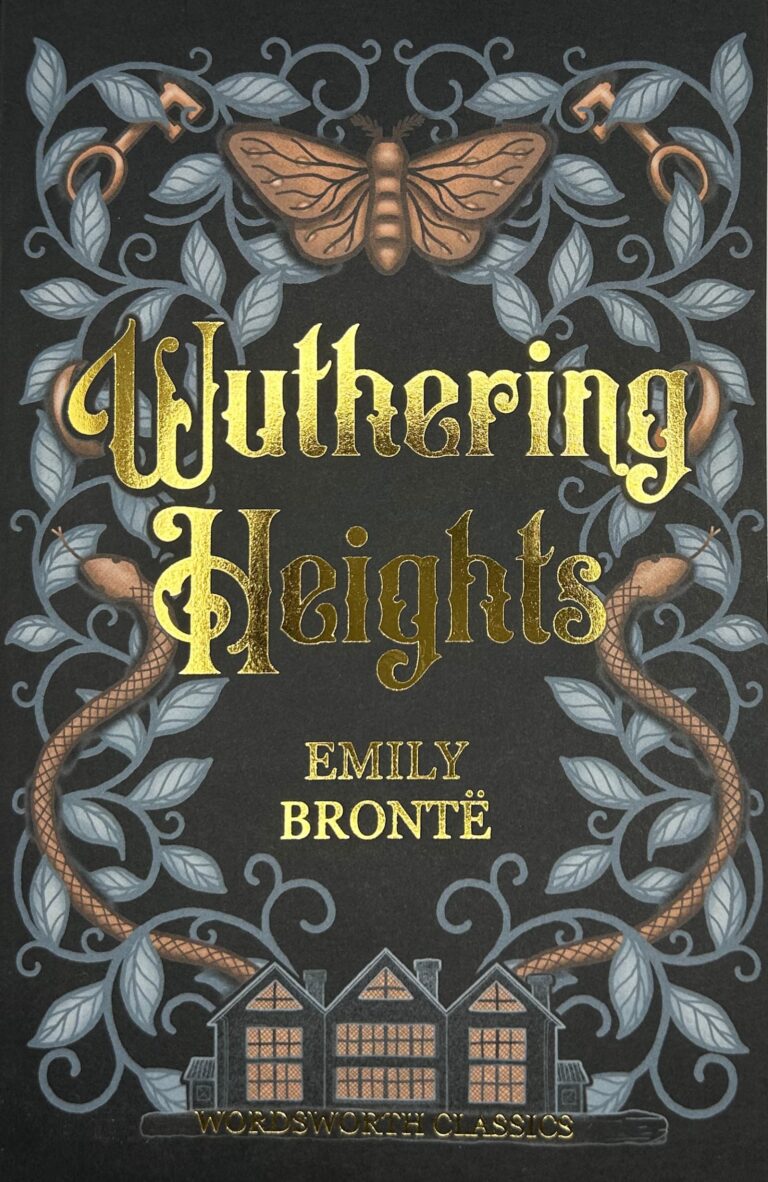
If any of you guys have been with me since I first started my blog (thank you if you have been), you’ll know that one of the first book reviews I ever wrote on here was a review of Charlotte Bronte’s book, Jane Eyre, a book that I thoroughly disliked for what I saw to be its glorification of Stokholm Syndrome (apparently, women have liked the bad boy trope ever since the 1800s). That said, when I was choosing what I would be doing for an AP course this year and saw that for British Literature, I would be reading Emily Bronte’s book Wuthering Heights, I was quite excited to hate read it. I was expecting to find all of the same garbage in it as I did in Jane Eyre given that Emily and Charlotte were sisters writing in the same genre. However, after reading it, I came to a much different conclusion about Wuthering Heights. It was actually a really good book that has easily become one of my all-time favorite reads.
#1: We Stand with Ellen
My favorite thing about the entire book was the fact that it’s primarily narrated by Ellen/Nell, who was the housekeeper/nurse who saw everything go down. That means that the book is narrated from her first-person point of view, and she does not hold back in telling us how absolutely horrible and abusive many of the relationships throughout the story are. There is no trying to make it fluffy and cute like what we saw in Jane Eyre. Everyone, except for a handful of people (that handful including Ellen), is completely unlikeable, violent, and begging to be hit in the face with a brick.
My favorite scene with Ellen is where she completely destroys 15-year-old Catherine Earnshaw’s belief that she loves Edgar Linton (who is one of my favorite characters) when it actually turns out that she loves Heathcliff in the famous “He is more myself than I am” speech. Ellen totally debunks Catherine’s belief that she loves Heathcliff or Edgar when she shows how Catherine’s “love” for Edgar is vapid and only based on his youth, happy demeanor, and money and recognizes her “love” for Heathcliff as an unhealthy and destructive obsession.
We need more narrators in romance novels like Ellen. I love her commonsense analysis of the situation and steadfast faithfulness shown throughout the book as she brings some sanity to the general violence of the story.
#2: Psychological Horror Show
For what I originally thought was just going to be a cheesy romance story from the 1800s, Wuthering Heights is actually something that dives deeply into the psychology of what makes a psychopath, and it does so in a way that is terrifying and fun to analyze.
In the beginning of the story, we’re introduced to Mr. Earnshaw, who brings home a foundling boy who he names Heathcliff. Heathcliff is only slightly older than Catherine and both of them are outcasts in some sense. Catherine is not liked by her mother, father, or Ellen because she is a wild child who, instead of taking the commonsense approach to being disciplined and changing her behavior, leans into her bad behavior, which turns her family against her. She becomes hard-hearted towards them and basically learns to act only in accordance with what she feels is right from a young age. We see this most potently in the scene where Mr. Earnshaw is about to die, and he asks 12-year-old Catherine why she can’t be a good girl, to which she bluntly replies, “Why cannot you always be a good man, father?” Though it’s a brutally honest answer, it shows to what extent her resentment has grown.
Meanwhile, Heathcliff is quickly accepted and doted upon by everyone in the Earnshaw family except for Catherine’s brother, Hindley. Hindley, being the oldest and used to being the center of attention, does not like Heathcliff’s stealing the spotlight and treats him horribly, often unleashing torrents of physical abuse on him even when Heathcliff is a young boy. However, Heathcliff – even as a child – has learned how to be incredibly manipulative and turns Hindley’s threats of abuse on him, saying that if he abuses him, he’ll run to Mr. Earnshaw, who’ll take his side, punish Hindley, and give Heathcliff what he wants. Later in Heathcliff’s teen years after Mr. Earnshaw dies, he has no one to protect him and he is the constant victim of mental and physical abuse from a vengeful Hindley who sees Heathcliff as the source of all of his problems.
From this story of how Heathcliff, Catherine, and Hindley grew up, we get a story of generational trauma. All three children were subject to parents that – though they loved them – did not do enough to discipline or help them grow up into good people. Because of this and lack of personal accountability, all three children grow up to be absolutely terrible people who are spoiled, act like overgrown toddlers, and are generally dysfunctional. Hindley dies a drunk, Catherine dies insane giving birth to her daughter, Cathy (which starts the second part of the book), and Heathcliff becomes consumed in his want for vengeance, eventually dying a miserable man haunted by the ghost of Catherine, who he sort-of had an affair with while she was married to Edgar Linton. This generational trauma is broken, however, when Cathy marries Hindley’s son, Hareton, ending the feud between the Lintons and Earnshaws.
#3: Unhealthy Relationships are Portrayed as Unhealthy
I already sort-of talked about this when talking about Ellen, but I can’t say enough how much I appreciate that Wuthering Heights did not hold back in showing how unhealthy the numerous love triangles are throughout the book. The most obvious example of an unhealthy love-triangle in this book is the Heathcliff/Catherine/Edgar pairing. Catherine, having grown up with Heathcliff, has an understandable attachment to him that unfortunately turns into something totally twisted. She knows that he’s a psychopath, but because they went through similar neglect, she feels that he’s her soulmate. Thus, whether because of her own defiant spirit or his influence on her life, she acts much like him in some notable ways. They’re both manipulative, used to getting their way, are totally abusive both physically and mentally…a match made in hell. Because of this, Catherine becomes obsessed with him and Heathcliff plays a game of hot-and-cold, leading her on and dropping her repeatedly, even after she is married. He doesn’t truly love her and often acts to her detriment but similarly has an attachment to her because she was the only one who saw him as a human during their childhoods.
Meanwhile, Edgar Linton – though an unlikeable, stupid character at the beginning who ignores a lot of red flags (such as Catherine’s physical abuse and gaslighting of Ellen and her gaslighting of himself) – does truly love Catherine, despite the fact that after a year of being married, the magic begins to wear off. He stays with her and genuinely tries to protect her from Heathcliff’s terrible influence by separating the two. He’s loyal to her though he knows that she only married him for his youth and wealth and puts up with her temper tantrums until her later death. He’s the only love interest in this book who isn’t a total enabler and actually tries to do something sane.
Another love triangle in this book is the pairing between Heathcliff/Isabella Linton/Catherine. This one is possibly the most insidious and disturbing because of its sheer violence and the reasons why it was brought about. After the Linton parents die and Catherine and Edgar get married, Isabella Linton (Edgar’s sister) starts hanging out more around Wuthering Heights, which brings her into contact with Heathcliff. She, being 16 and attracted to Heathcliff’s mysterious bad-boy demeanor grows infatuated with him, something that both Heathcliff and Catherine notice. Catherine thinks it’s funny and when she fully reveals it to Heathcliff, makes sure to make as much of a show of it to embarrass her sister-in-law. Heathcliff then openly brags about how if he were to marry Isabella, he would beat her mercilessly and a few days later, he proposes to Isabella, who’s still infatuated enough with him to marry him. She feels like she’s bested Catherine (who until this point, she believed to be trying to keep Heathcliff’s affection), but immediately after getting married regrets her decision as Heathcliff shows himself as the sadist he is, just so he can get back at Catherine for choosing Edgar over him and hurt Edgar for marrying Catherine. Heathcliff’s plan works and it’s only while Catherine is dying that he shows any remorse whatsoever, and even then, his remorse does not stem from love, but rather maniacal obsession.
The last love triangle I’ll mention is that between Cathy/Hareton/Linton (Heathcliff’s son by Isabella). This one is also disturbing because it preys on the ill-founded attachment between two young people, one of whom (Linton) is going to die soon. After growing up for years not knowing of Wuthering Heights thanks to her father, Edgar, Cathy runs into it and meets Linton, who she pities for his poor health and becomes infatuated with. She believes that they love each other, and they have a long-distance relationship through letters, which are later intercepted by Ellen and burned. Cathy still believes that Linton loves her, but Heathcliff (who’s been grooming the relationship to fit his purposes so he can become master of both Thrushcross Grange and Wuthering Heights) has been teaching Linton how to be an abusive, manipulative narcissist and forces Cathy to marry Linton by trapping her in Wuthering Heights. After Edgar and Linton die, Cathy is then forced to spend several years under Heathcliff’s reign of terror until he dies. After that, she begins to heal from the trauma and teaches Hareton (Hindley’s son who was raised by Heathcliff as a pauper) to read, beginning a relatively healthy relationship that end with them getting married.
#4: Symbolism
The symbolism throughout Wuthering Heights is great and is one of its many strengths. One of my favorite examples of symbolism in Wuthering Heights is the different atmospheres that separate Thrushcross Grange and Wuthering Heights. Thrushcross is generally a cheerier, sunnier place that’s opulent and well kept. Meanwhile Wuthering Heights is a large mansion that’s fallen into disarray since coming under Hindley’s possession and continues to decay under Heathcliff. Where it’s set is foreboding with a foggy atmosphere, adding to the element of mystery and fear that surrounds it. The only time when the clouds begin to part and Wuthering Heights begins to become a better place is after Hareton and Cathy start their relationship, which was a great way to bring a happy ending to a nightmare of a story.
#5: Present Fathers
Mr. Earnshaw wasn’t the best father in the book, so we don’t care about him. Who we actually care about is Edgar Linton, who did his best to stay by his wife’s side and protect her, and then did what he could to shield Cathy from ever experiencing the same abuse that Catherine and Isabella endured. Edgar Linton wasn’t without his faults, to be sure, however he did what was in his power to do and I think that’s something that more writers (especially romance writers) should take note of because often fathers are absent in some way in these types of books.
Until next time,
M.J.
Discover more from The Tanuki Corner
Subscribe to get the latest posts sent to your email.
 The Tanuki Corner
This blog perfectly explains why (most) men don’t like romance novels; we’re (mostly) all sane
LikeLiked by 1 person