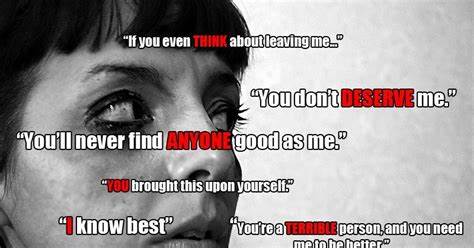
A while ago, I ran across a meme where it was outlining the traits of an abusive relationship and trying to apply them to God. This meme was so incredibly stupid that I scrolled past it (and unfortunately can’t find it again for the sake of this post), but it did bring up an interesting point that a lot of deconstructors bring up, the idea that how God acts is abusive and thus, He is not deserving of worship. However, does this hold up with what the Bible says about God’s character? Let’s dive in.
#1: Possessive Behavior
This can basically be summed up as all-consuming jealousy that leads to the person wanting your full attention 24/7, getting angry when you spend time with anyone else. In relationships, this is something that should be avoided and if it happens, you should absolutely run away, but does this apply to God?
The answer is: No
The first problem that we see when we attribute human behavior to God is just that. We’re attributing the actions of sinful people to a perfect God who is not sinful. His ways are not our ways (Isaiah 55:8-9).
Secondly, we are His creation. We are meant to be thankful and obedient to the one who created us. It is right that God should have our worship because without Him, we wouldn’t be here. We should worship the Creator, not the creation (which includes ourselves) for that reason.
#2: Controlling Behavior
This includes wanting to know everything from what you’re doing, how you’re doing it, where you’re going, who you’re with, etc. and is a common way trying to ensure control in an abusive relationship. However, the reason why this criticism doesn’t really apply to God is because 1). He already knows all of that stuff before you even do it and 2). It isn’t to ensure control.
God is already in control of everything. He doesn’t need to manipulate you to ensure that. Furthermore, God doesn’t demand that you tell Him everything. We are left to choose to do that ourselves in the form of prayer, treating worshipping God like talking to your best friend. He wants a relationship with us, one that we can choose whether or not to have.
#3: Isolating You from Friends and Family
This critique when applied to God is completely ridiculous. While there are cases in the Bible where people were asked to leave behind everything to follow God (take Abraham as an example), God is not demanding that when you follow Him that you leave behind everyone who might disagree with what the Bible teaches. In fact, He actively encourages us in the Bible to interact with people who don’t believe in Christ and we see that play out time and time again (i.e.: Matthew 5:44, 1 Peter 3:15, Colossians 4:5-6 , Romans 12:18, 2 Timothy 2: 24-25, Ephesians 6:1-3, 1 Corinthians 7:12-14, 1 Peter 3:1-2). If your church is demanding that you separate yourself from your family because it’s “God’s will”, then it’s time to leave that church.
#4: Violating Your Privacy
Just like with #1, this is something that God can do because He is our creator who is omniscient and knows exactly what you’re going to do. Saying that He’s violating your privacy because of that is like critiquing an author for knowing what a character is going to do or say in the next paragraph.
#5: Shaming
This is a critique that has some grounds in reality, however you once again have to go to critique #1. God created us and put laws in place to ensure our well-being. He also gave us the ability to think for ourselves. That means that we have the ability to choose him or not. When Adam ate the apple with Eve, he was doing that in direct violation of God’s rule, thus bringing sin and death into the world. We had been made perfect and Adam ruined that for everyone when he ate the apple. Because of that, we needed a savior to come and make us right again with God, and that savior was Jesus.
Does that mean that if we take Jesus by faith that we can continue sinning and it will all be hunky-dory? No. But what it does mean is that if we have faith in Jesus, we will want to change our ways to better reflect the one that saved us. This “shaming” (being told you’re sinful and imperfect) isn’t abusive but is rather showing us the inadequacy of our own works to save us, shining a light on why we need God.
#6: Blaming You for Their Bad Behavior
God is not cruel. He does not act badly, but rather with justice. When we sin, He allows us to take the penalty for that sin so that we learn not to do it again. If that didn’t happen, how would we grow as people? It’s like if you accidentally break a lamp or a vase in your parent’s house as a kid and though they love you, they make you buy the replacement or take away a toy that you really like. This punishment, while it sucks at the time, teaches you to be more careful in the future.
#7: Pressuring you to Conform
God created you; He has the right to ask you to do things and expect obedience. This is like faulting a parent for telling their kid that they’re all going out to a family dinner and they’re coming with, whether they like it or not. It’s their kid. They’re allowed to do that. It’s the same with God.
#8: Inability to Show Compassion
This one is so incredibly ridiculous that I have to wonder if the people accusing God of this ever read their Bibles. Aside from God showing compassion for us sinners by literally sending His son to live amongst us and die for us, taking His wrath in one of the grisliest fashions known to man, God also showed compassion in the Old Testament by sparing Noah and his family, giving the human population another chance to live after the flood, promising Lot that He would spare Sodom and Gomorrah if there were just ten righteous people there (unfortunately for Sodom and Gomorrah, there weren’t even that many righteous people), allowing women like Sarah and Rebecah to become pregnant though they had been barren for years, not completely destroying Israel for all the times they weren’t faithful, etc. There are so many Bible verses showing God’s compassionate nature that I can’t list them all here. Heck, God still shows compassion for us today by being patient, giving us the choice to follow Him or not. We’re given chance after chance to repent and turn to Him. If that doesn’t show patience and compassion, I don’t know what does.
So, no. God is not abusive.
Until next time,
M.J.
Discover more from The Tanuki Corner
Subscribe to get the latest posts sent to your email.
 The Tanuki Corner
Would you consider genocide abusive?
Would you consider slavery abusive?
LikeLike
Those will be their own posts coming soon.
LikeLiked by 1 person
I look forward to reading them.
However, a simple yes or no at this point is not unreasonable, surely?
LikeLike
I would hazard a guess that those answers will be in the future posts
LikeLike
Yup.
LikeLiked by 1 person
Yay. Normally when I hazard incorrectly, I get banned from the trampoline park.
LikeLike
Are you in any way suggesting genocide and slavery, which both feature in the bible, are not abusive?
LikeLike
In the words of Master Yoda: “Patience, young padawan.” You will get your answer about slavery on Friday, and your answer about genocide next Friday.
LikeLike
I sincerely hope you are NOT going to defend the actions of your god, Yahweh, and suggest there was no genocide or slavery with the usual apologetic drivel about indentured servitude and Yahweh has the right to take life as he pleases. To do so would be tragic and risible suggesting a serious degree of dishonesty.
LikeLike
I don’t know man. When it comes to the subject of abuse, He really doesn’t seem to care. He wrote verses that led to the end of racism and polygamy, but when it comes to parents and grandparents controlling and torturing their progeny… it’s praise, praise, praise for the family, thus explaining why there are so few resources for people being abused. Society doesn’t care, the justice system doesn’t care, the church doesn’t care… not even when the victim’s health begins to deteriorate.
I’ve read apologetics for years, and yet… nobody bothered to tell me that I was being tortured in a way that’s by some sick means, completely legal, and it gets more hopeless every single day. God is willing to complain about mixed fabrics, but not how unrepentant or sneaky abusers are.
LikeLiked by 1 person
Can you please provide me with some Bible verses that support parents or grandparents abusing their kids?
LikeLike
Shoot, I thought there was a reply. Sorry for missing you.
I mean, think about all that Proverbs has to say about children that embarrass their parents but I can’t find anything about the other way around or worse, the closest it ever gets is “don’t forget to discipline” which points to neglect, but not active mistreatment. Considering that the law books of the Bible, like Exodus, demands that the most obvious instances of assault be looked into and any case that didn’t involve the victim dying (Exodus 21:20-21) or realizing what the abuser is about to do and makes a scene that is correctly interpreted as a cry for help (Deuteronomy 22:23-24) be excluded or have the victim punished is pretty reminiscent of the modern justice system’s common response to abuse – “Nah, call us back when you’re murdered.” People can actually leave you with serious health conditions and that doesn’t even require them to actually hit you to do it.
It really sucks to read things like, “The human spirit persists in sickness, but a crushed spirit, who can bear?” and yet, still be expected to perfectly play lawyer whenever everyone defaults to “well, we’ve always been taught to honor our parents, so your family can’t be hurting you! How can anyone decide not to protect their own children?”
LikeLike
Hello,
On the verses that you bring up, we need to think about context. Deuteronomy 22:23-24 is talking about a woman cheating on her husband with another man. According to the rest of the chapter, if this had been done in an area where no one was watching and she claimed that she had fought back, the benefit of the doubt would’ve been given to her, and the guy would bear the punishment for rape: death. But if there’s evidence that this was consensual and both parties were guilty of adultery, this was punishable by death for both because it’s in direct violation of the command not to commit adultery. Israel was meant to be the nation dedicated to God, so sins like that were not tolerated.
As for Exodus 21:20-21, in the larger context of the Old Testament, it’s implied that you couldn’t just beat up your slave for whatever reason. Generally, this was saved for acts of disobedience. (This standard was even carried into the 19th and 20th centuries, with flogging or caning being used as punishment for disobedience or insubordination in the British Navy. Singapore also uses it to this day for certain crimes.) That in of itself is noteworthy as many ancient civilizations never had such rules, but it’s even more notable that if the slave was beaten to death, the owner would be punished severely, which was another rule that was not present in many ancient civilizations.
But regarding the question of familial abuse, yes, the Bible mostly talks about honoring and obeying your parents. That’s true. However, there is a difference between what it means to honor your parents or elders vs. to obey them that unfortunately many Christians and churches seem to forget or ignore completely.
To honor your parents doesn’t mean that you have to agree with them or even like them. It’s similar to how one views the president. You may have strong disagreements with what he’s doing, but you still have to respect him for his rank.
This does not mean, however, that if they’re being abusive to you, that you stay silent. Sin should come to light and hiding it helps absolutely no one. The Bible calls for accountability, and if someone in your church or family is abusive towards you, you should call them out. Unfortunately, many people don’t understand this, and it is to the detriment of everybody.
On that topic, honoring your parents or elders doesn’t mean that you necessarily have to reconcile with them if they’ve done wrong to you. While you can and should forgive (forgiveness has been proven to have profound effects in bringing healing in trauma victims), that does not mean you should reconcile with them. This, of course, varies from case to case, but if the person shows no remorse or repentance for what they did, or a change in behavior, then while you should forgive them, that does not mean that you should reconcile with them or even refrain from calling for legal justice depending on the sort of abuse endured (i.e. domestic violence, sexual abuse, etc.)
As for obeying your parents, it can be a form of honoring them and, generally, it’s good practice to obey them. However, the Bible doesn’t call us to follow them blindly. In cases where they’re asking you to do something sinful, you should disobey, because God’s law is ultimately above what your parents’ rules are.
Finally, I want to point out that in the Bible, familial abuse and dysfunction are very present (especially in Genesis) and is never looked well upon. Usually, it’s even punished in some way. Parents who are abusive to their children are not going to a free pass for what they’ve done to their kids just because they’re their kids. They will have to answer for it.
Sorry for the long read, but hopefully, this helps clear some things up. This has been a question in my own immediate family as it relates to how to interact with my extended family, so I get how this can be a hard one to struggle with and there are a ton of articles and podcasts about this coming from a Christian perspective. If you have any more questions, I’ll try to get back to you as soon as possible.
LikeLike
No, I’m actually grateful for the long read. I really do thank you for it. I just don’t understand why I’m now in a difficult situation that gives people a reason to treat me like an enigma at best and a liar at worst.
The thing that really sucks is just how sneaky some people can really be. They can put on a nice act for guests, wait until you mess up to berate you and if the stress of living in their world starts causing fatigue or chronic pain… They just use that to argue you’re the problem. It sucks, it might as well be witchcraft.
LikeLike
I’m way under the impression that the expectation is stay in contact or make sure everyone else doesn’t know about the abuse, which just makes me think, “well, there’s no way this will get better, everyone already thinks they’re innocent.”
Usually.. if it’s not just to “stop being such a snowflake” and sacrifice yourself for the family tradition.
LikeLike
I’m so sorry to hear that. I wish there was more I could do or say that could possibly help you, but unfortunately, I’m not an expert on dealing with this kind of stuff, and I don’t want to accidentally give bad advice that could make the situation worse.
Not to sound cheesy or churchy, but I’ll pray for you that things get better. There are a few articles on Bible Questions Answered | GotQuestions.org, though I’m not sure how helpful you’ll find those.
LikeLiked by 1 person
I guess the main point I’m trying to make is I feel like everyone else has gotten a way out except me. Being seriously hurt and not able to prove it or do much of anything about it and being left to think not even God could bother to think about your situation is the worst feeling in the world.
There are some things I forgot to mention.
I’ve been pretty badly shaken by someone who said that it’s your family’s job to protect you, not the police, which strikes me as unfair since my own family doesn’t care much about me. It’s bad enough that my grandma had kids because she was pressured into it and made everyone pay for it until she died, but now I’m afraid of the possibility of other relatives traumatizing me to the point where if I do get out, I would barely be able to take care of myself, much less help anyone else who is facing the same problem. That would feel horrifyingly pointless in the grand scheme of things.
Every time I see Christian influencers complain about people not having kids (not the subject of this article I know), and then go on and on as to why abusive parents should have their reputations protected, I get so freaked out. I was even treated as a snowflake for saying people should be cautious about big choices like that.
LikeLike
Hello again,
Sorry for the late reply. I’ve been trying to figure out how to respond to this as it sounds like you’re in a bad situation. For the sake of your privacy (since this is a public forum) would you be okay with continuing this conversation over email.
LikeLike
Yeah, that’ll be nice. I find my circumstances baffling, really.
LikeLiked by 1 person
Okay. I’ll send you an email.
LikeLike